Sail Through Menopause: Secrets to Hormonal Harmony

The menopause is a natural change in life for women, which happens around 50. Symptoms include hot flushes, night sweats, mood shifts and fatigue. It’s interesting that in Japan, there is no translation for ‘hot flushes’ as they don’t happen.
This is thought to be that because they don’t eat a lot of dairy (rich in oestrogen), they don’t have such a ‘crash’ when they reach middle-age, so don’t have strong menopause symptoms.
But in England, women are encouraged to eat lots of dairy (to keep bones strong) which is not needed (you can eat plenty of plant-based calcium and do weight-bearing exercise). It’s the countries that guzzle lots of dairy (the UK, USA and Scandinavia) that get more osteoporosis than eastern countries.
Now the menopause has been made into an ‘illness’ to sell lots of things people don’t need, and give HRT medicine, which has side effects (and some brands are made from the hormone-rich urine of pregnant mare horses, with their calves killed).
Did you know that humans are one of the few species that go through menopause. Other creatures include rhesus monkeys, pilot whales and orcas (killer whales) – the males stay with their mums for life (aah!)
The older you get, the better you get. Unless you’re a banana. Anon
What is the menopause exactly?
It’s simply the end of a woman’s reproductive years, cited as after 12 months without a period (this can be from 45 to 55). The declining function of ovaries and lower hormone levels of oestrogen and progesterone) can lead to symptoms like hot flashes, brain fog, sleep disturbance, night sweats and mood changes.
Lower oestrogen may lead to increased risk of bone loss and heart disease. Keep bones strong by eating plant-based calcium rich foods and work out with resistance bands. These are less heavy than weights. Personal trainer Lucy Wyndham-Read also has a simple bone-strengthening workout, which only takes 5 minutes a day
Perimenopause is the transition stage, when cycles are irregular and symptoms may begin.
Tips to sail through menopause, naturally
Reduce dairy (then you won’t have such a big oestrogen drop). Eat plant-based calcium foods instead like dark green leafy veg (check medication to avoid vitamin K interactions), figs and fortified plantmilks.
- Drink plenty of water.
- Give up smoking and reduce alcohol intake.
- Enjoy plenty of regular gentle exercise.
- Get plenty of good quality sleep.
- Eat less spicy foods (they make your face hot!)
- Try to relax (quiet times, prayer, meditation, yoga etc)
Natural nutrition helpers for menopause
- Green tea is good for menopausal symptoms. This is not as oxidised as normal tea (which is fine too, just not as health as green tea!) Avoid caffeine for pregnancy/nursing.
- Phytoestrogens: Foods like tofu and tempeh, flaxseeds, chickpeas, and lentils contain plant compounds that act a bit like oestrogen. They can soften flushes for some women.
- Anti‑inflammatory choices: Berries, leafy greens, tomatoes and plant-based omega 3 fatty acids can help ease joint pain and fatigue. Walnuts add healthy fats.
- Bone support: Choose calcium-rich foods such as tofu set with calcium, sesame seeds, dark greens (check medication), and fortified plant milks. Plus a vitamin D3 supplement in autumn and winter.
- Magnesium: Spinach, kale, pumpkin seeds and beans support bone formation.
Check medication before eating lots of leafy greens.
Together Health menopause supplement
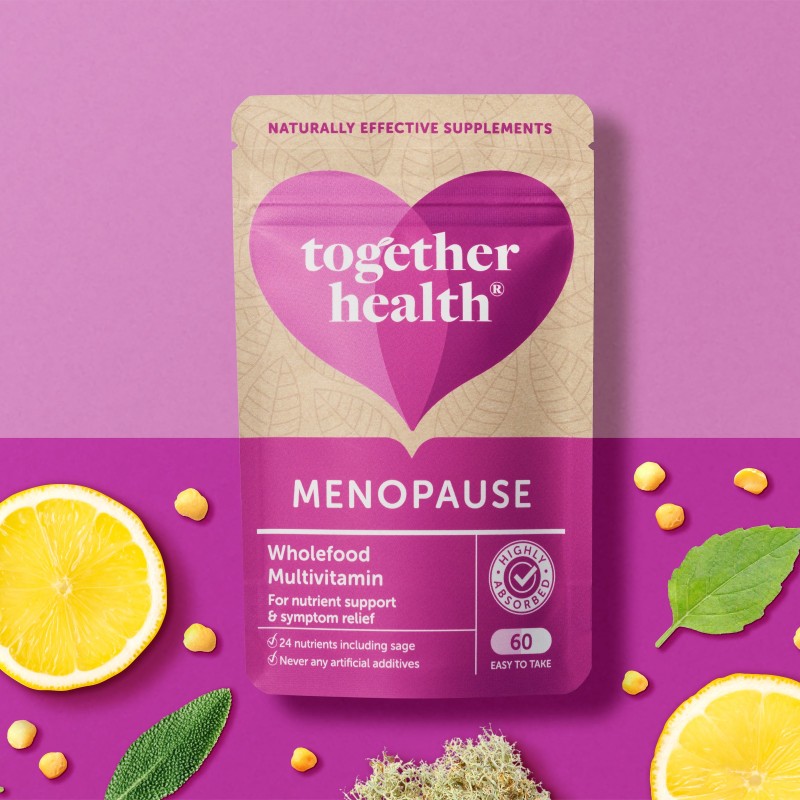
Together Health Menopause has been specially developed for the unique needs of women during menopause, with higher levels of vitamins B1, B6, B12, biotin and vitamin D3. It also features highly absorbed wholefood vitamins and minerals, plus herbs sage and ashwagandha to alleviate symptoms.
Always check with GP if pregnant/nursing or taking any medication, before using supplements.
This supplement contains ashwagandha to help balance hormones. Some people are concerned as it’s banned in Denmark due to concern over inducing early births and possible toxicity.
Critics have said that the ban came into force due to animal tests (never accurate) and giving excessively high doses. It also is not taking into account the difference between risky leaf extracts and safer root extracts. Together Health uses quality organic roots from Rajasthan in Northern India. Which remains legal and free to sell in the UK. But should be avoided for pregnancy/nursing and anyone on thyroid medication. Talk to your GP with any concerns.
The capsules are made from plant cellulose from the Pinus Elliottii tree, and can be separated and the contents mixed with food or drink if preferred.
The supplements are sold in easy to recycle pouches that are plastic-free and contain a protective film made from wood pulp. All layers are home compostible.
Subscribe online for big savings, and get double rewards cash on orders, you can pause or cancel anytime.
It features:
- Vitamin D3 to maintain normal bones
- Sage may improve symptoms of menopause
- Vitamin B6 to regulate hormonal activity
- Vitamins C & E to protect cells from oxidative stress
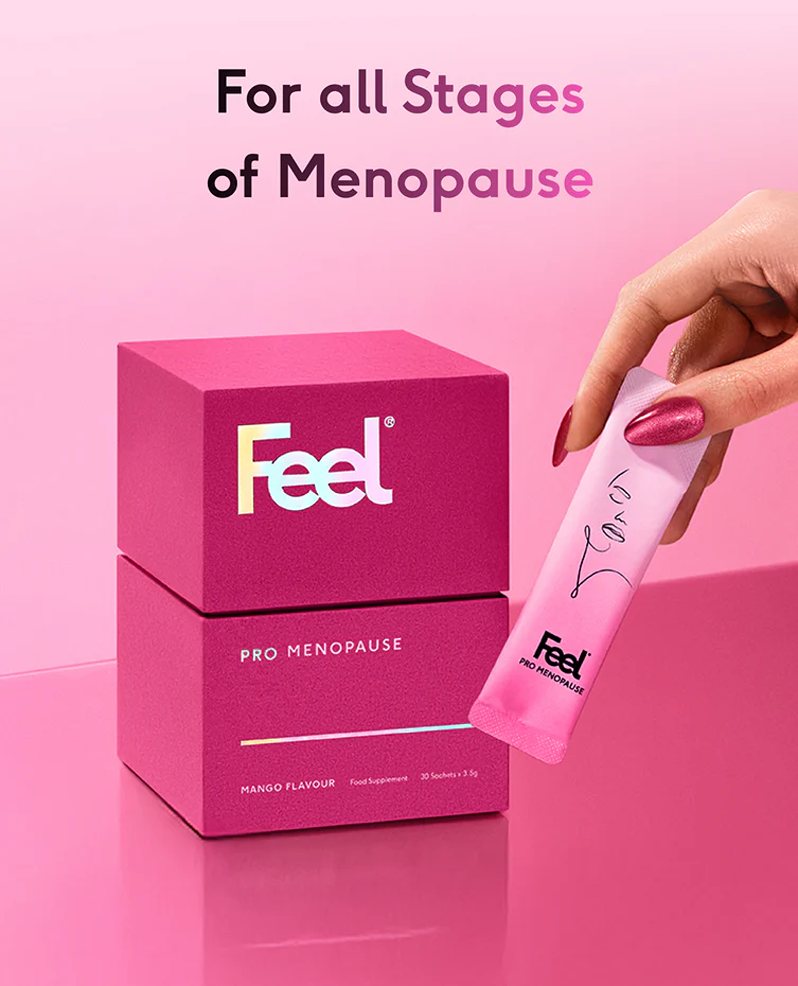
Feel Pro Menopause has been developed alongside expert specialists, using targeted plant-based ingredients to help women experiencing menopause, perimenopause and postmenopause.
This is designed to help hot flushes, night sweats, fatigue, brain fog and hormonal balance, with results within 90 days.
Use discount code WELCOME_20 for 20% off first subscription order (not for bundles nor combined with other discount codes).
Some HRT medicines are made with urine from chained pregnant horses. Ask your GP to ensure you are not supporting this practice by being prescribed such medicines. Never flush old medicines down the loo, take them to your local pharmacy for recycling.
Results to expect with Feel Pro Menopause
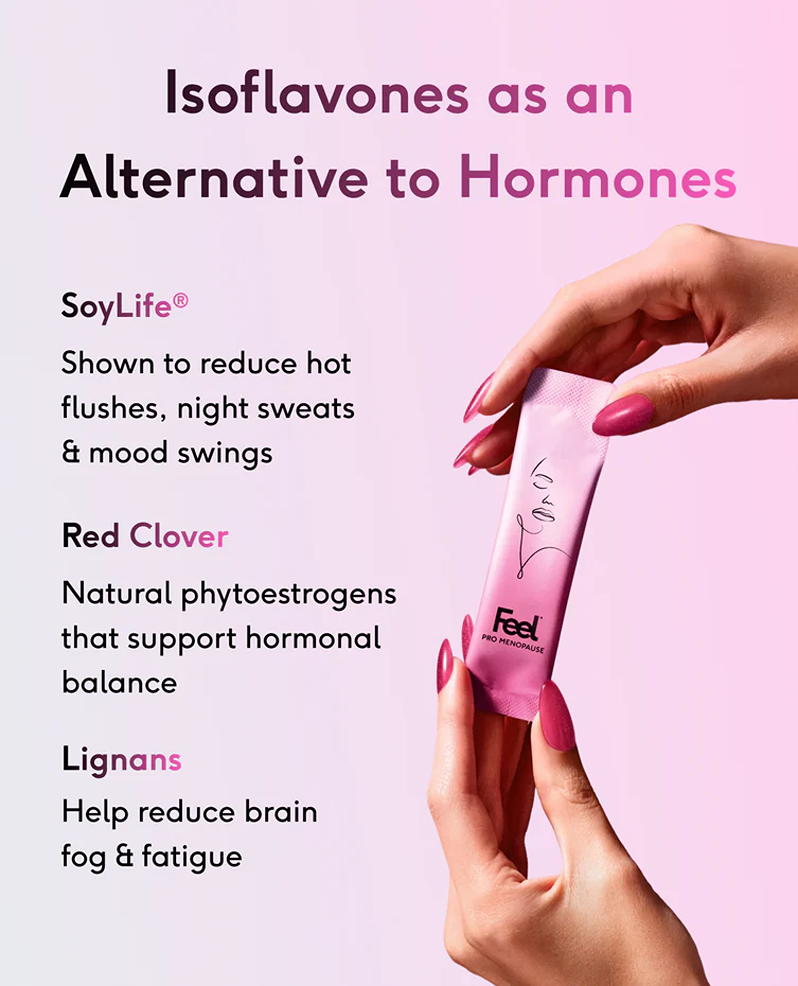
- Month 1 – low estrogen levels may start to improve due to quality isoflavones, while vitamin B6 works to help with regulating hormones. Be vitamins help for energy and vitamin B5 is good for cognitive function (less brain fog!)
- 2 months – Energy levels continue to improve due to B12 and folic acid, and flaxseed oil enables better absorption of vitamin D3, which helps with immunity.
- 3 months – Overall wellness and better hormonal wellness (due to isoflavones). Vitamin D3 helps to metabolise calcium for reduced bone less density and more immunity.
- 1 year and after – Isoflavones and vitamin B6 support better hormones, while B12 and panthothenic acid give better energy and mental performance.