How to Remove Stubborn Stains, Naturally
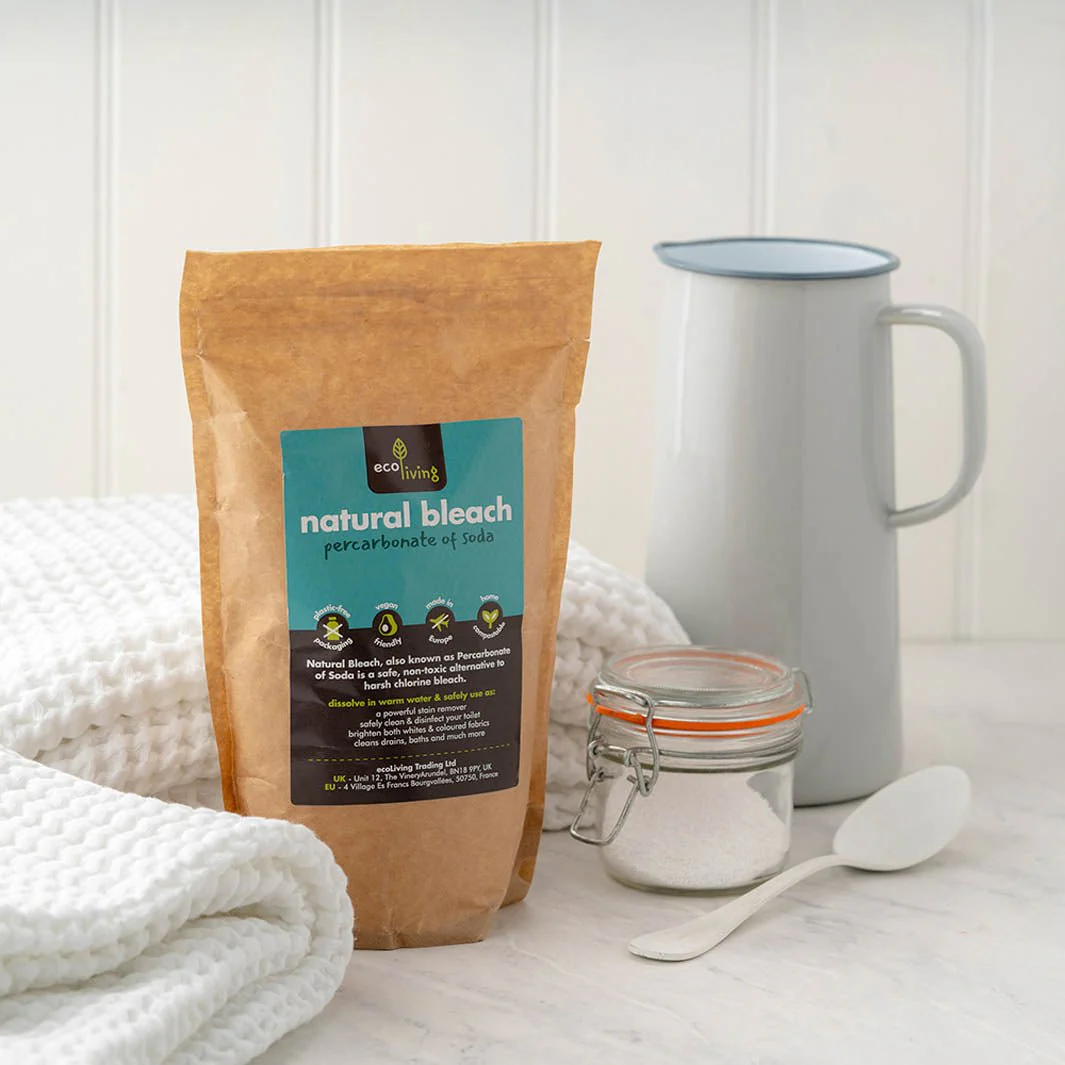
This paper pack of natural oxygen bleach is truly a miracle worker, and a far safer alternative to chlorine bleach, which is harmful to humans, pets and aquatic life when rinsed down drains.
Wear natural rubber gloves and old clothing and wash hands after use. Keep away from eyes, children and pets (citrus is toxic to animal friends).
You can recycle empty bleach bottles with household recycling. For any bottles with product inside, don’t pour down drains. Instead take to your council’s hazardous waste department. If you don’t have a car, call your council for collection.
Natural oxygen bleach is safe and biodegradable. Its official name is percarbonate of soda, and after activating with warm water, it releases oxygen to remove stains and odours. It only is active for around 40 minutes, then you can safely pour leftovers down sinks and drains, to clean them too!
Ideal to prevent yellow stains on laundry (like underarm stains), it’s also great to remove organic stsains like tea and coffee, fruit juice, food sauces, grass and pet stains, bloodand red wine. You can also use it in the bathroom as an alternative to chlorine bleach.
How to use oxygen bleach
- General cleaner: Use to clean sinks, baths, loos. Add 4 tablespoons to 1 litre of hot water. It’s also good to clean bins and ovens. To clean wood, brush with the solution, wait 10 to 15 minutes then brush again and rinse well. For stone, apply solution and rinse well.
- Stain remover: Dissolve 2 to 4 tablespoons in a bowl of warm water, and pre-soak items. To boost laundry, add 2 to 4 tablespoons to laundry powder in dispenser drawer (removes odours and brightens whites).
- To unblock and clean a sink: Pour 2 to 3 tablespoons in the sink plughole, add boiling water. Wait a few minutes, then rinse.
Delphis Eco Stain Remover: Cleaning Without Harsh Chemicals
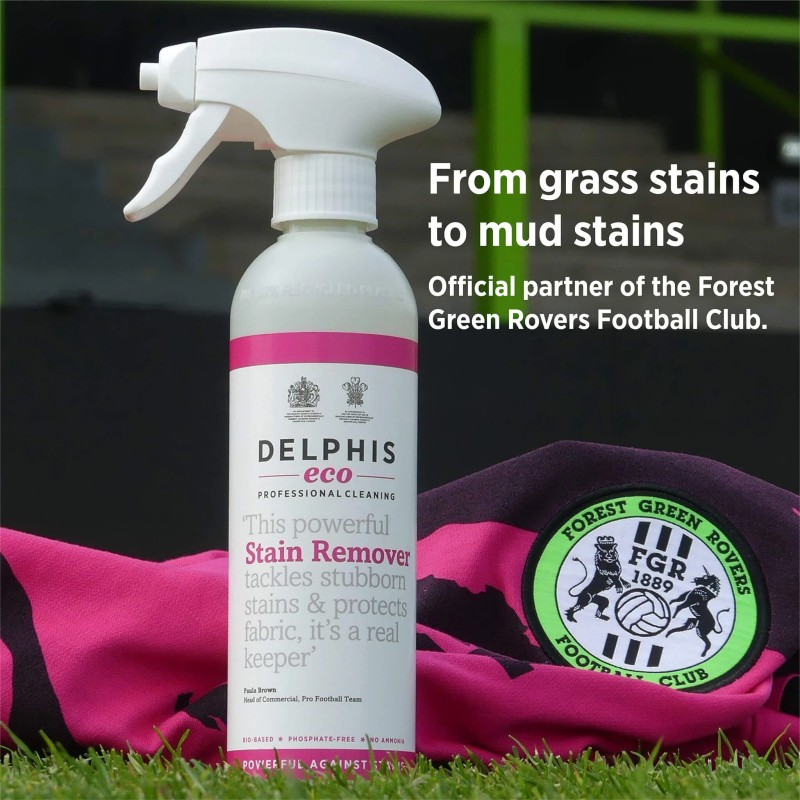
Delphis Eco Stain Remover is from a reputable company that makes eco-friendly commercial cleaning products. Sold in easy-to-recycle packaging, these are also vegan and not tested on animals.
This bio formula can remove most stains, and be used as a spot treatment (it’s biodegradable and safe for septic tanks). It dissolves stains by weakening connections between the stains and fabric.
To use, Suitable for most fabrics, remove residue then rinse with cold water, and massage into fabric with a dry or damp cloth, and agitate with a brush for deep stains. Rinse fabric again with cold water and repeat, if needed. For stubborn stains, reapply and allow to sit for 2 minutes, before washing.
Do not use on leather, spot test on silk.
How to Use Delphis Eco Stain Remover
- Remove any excess residue from the stain.
- Rinse the area with cold water.
- Apply the stain remover and gently massage it into the fabric using a dry or damp cloth.
- For deeper stains, use a soft brush to gently agitate the area.
- Rinse again with cold water and repeat if needed.
- For stubborn marks, apply again and leave for up to two minutes before washing as normal.
For the best results, treat stains as soon as possible. Fresh stains are usually much easier to remove than stains that have been left to set.
Natural Oxygen Bleach: A Gentler Alternative
Natural oxygen bleach is another effective option for brightening fabrics and tackling stubborn marks. Unlike traditional chlorine bleach, oxygen bleach works by releasing oxygen to lift stains and brighten materials.
However, it is important to remember that bleach of any kind should never be mixed with vinegar or lemon juice. Combining cleaning products can create harmful fumes and should always be avoided.
Simple Natural Stain Removal Tips
Before treating any stain, follow these basic steps:
- Always blot stains rather than rubbing them. Rubbing can push the stain deeper into the fibres.
- Remove solid spills, such as food, mud, or dried powder, using a spoon or blunt knife.
- Rinse stains with cold water, especially protein-based stains such as blood, milk, and egg.
- Bicarbonate of soda and cleaning vinegar can help remove many everyday marks when used correctly.
Please note that citrus oils can be toxic to pets, so avoid using citrus-based cleaning products around animals.
How to Remove Common Household Stains Naturally
Grease, Cooking Oil, Butter and Makeup
Greasy stains can be difficult because oil quickly absorbs into fabric.
- Blot the stain with paper towel or blotting paper to absorb excess oil.
- Cover the area with bicarbonate of soda and leave for around 10 minutes.
- Use a soft toothbrush to help loosen the fibres.
- Work a small amount of washing-up liquid into the stain with your fingers.
- Rinse with warm water and wash normally.
Blood, Milk and Egg
Protein stains should always be treated with cold water, as warm water can cause them to set.
- Rinse the stain with cold water.
- Add a small amount of washing-up liquid.
- Apply a paste made from bicarbonate of soda and water.
- Leave for around 10 minutes, then rinse.
Red Wine
- Blot firmly with a clean cloth to absorb as much liquid as possible.
- Apply washing-up liquid mixed with cool water.
- Rinse and wash the fabric as usual.
Avoid rubbing, as this can spread the stain.
Tea and Coffee
- Rinse the stain with cold water.
- Apply a small amount of washing-up liquid.
- Use a bicarbonate of soda and water paste for stubborn marks.
- Rinse before washing.
Mud
- Allow mud to dry completely.
- Brush away the loose dirt.
- Treat the remaining mark with a mixture of washing-up liquid and water.
- Rinse and wash.
Grass Stains
Grass stains can usually be treated with simple household ingredients.
- Apply a bicarbonate of soda paste.
- Add a small amount of washing-up liquid.
- Leave for around 10 minutes.
- Wash as normal.
Hard Water Stains
Hard water marks are caused by mineral deposits and can often be removed with diluted cleaning vinegar.
- Mix cleaning vinegar with an equal amount of water.
- Spray onto the surface.
- Leave for around 10 minutes.
- Wipe clean and rinse.
Do not use vinegar on natural stone surfaces, as it can damage the material.
For grout, make a paste with bicarbonate of soda and water. Apply with an old toothbrush, gently scrub, rinse, and dry.
How to Recycle Cleaning Products Responsibly
If you have cleaning products at home that you no longer want to use, avoid pouring them down the sink. Chemicals can enter waterways and harm the environment.
Empty cleaning bottles can usually be recycled with household recycling, depending on your local recycling rules.
If a container still has product inside, contact your local council’s hazardous waste service for advice on safe disposal. Choosing safer, biodegradable cleaning products in the first place helps reduce the amount of hazardous waste created.
Bette’s Stain Bar: A Simple Plastic-Free Alternative
For those looking for an even simpler option, Bette’s Stain Bar is made using coconut oil and comes wrapped in paper packaging.
Despite its simple ingredients, it can tackle difficult marks including grease and older stains while remaining gentle on fabrics and skin.
How to Use Bette’s Stain Bar on Clothes
- Wet the stained area.
- Rub the damp bar directly onto the stain.
- Massage gently into the fabric.
- Rinse and add the item to your normal wash cycle.
Using the Stain Bar Around the Home
The bar can also be used for household cleaning.
Simply lather it with a damp, plastic-free cloth or sponge, then use it to clean:
- Dishes
- Kitchen surfaces
- Sinks
- Cleaning brushes
Rinse with warm water and it is ready to use again.
Many people love how long-lasting this product is. A little goes a long way, making it an affordable and low-waste cleaning option.