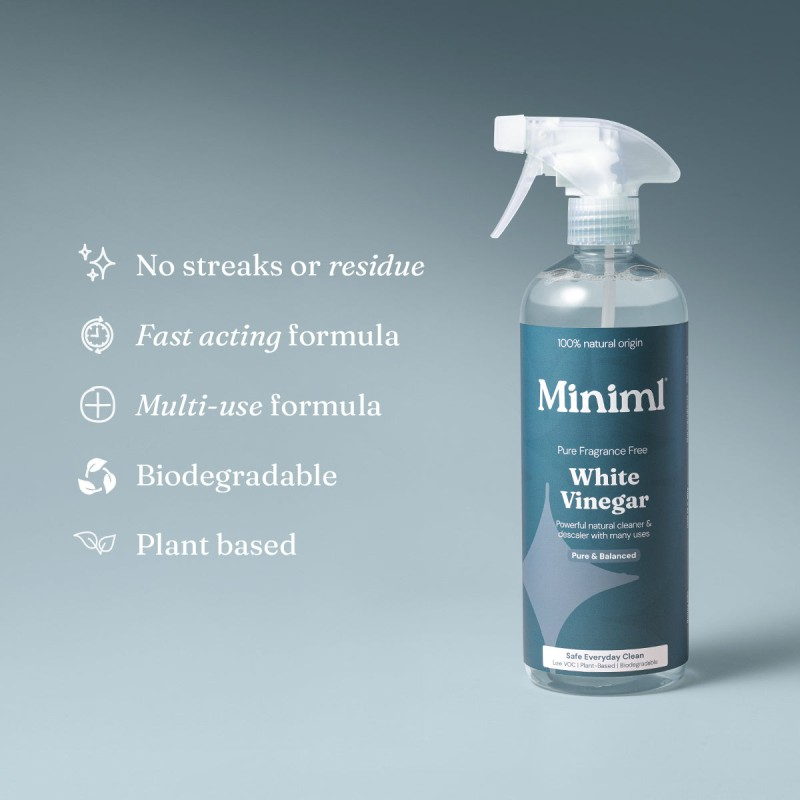
Unscented cleaning vinegar (cleans and removes limescale)
Cleaning vinegar is a useful household stable for both cleaning and laundry purposes. It’s affordable and at present only really sold online in bulk, so stock up and use it to replace many cleaning products.
Recycle empty toxic cleaning products at household recycling. Don’t pour unused products down sinks/drains – take to household hazard waste.
Miniml White Vinegar is made with biodegradable ingredients, you just buy the main bottle and then buy bulk refill drums after that. At end of use, take to your nearest refill store or send back for washing and refilling.
Choose the unscented version for pregnancy/nursing and in homes with babies or pets. The rhubarb and lemon versions are fine for other homes and offices. But avoid for the above (citrus is especially unsafe near pets, even when surfaces have been rinse and dried).
Avoid on natural stone (marble, granite, limestone), and on untreated wood or waxed floors. And also should not to be used to kill weeds (it could also kill beneficial insects).
Always ventilate rooms when cleaning and never mix vinegar with bleach. Use with plastic-free cleaning cloths and rubber gloves.
How does cleaning vinegar work?
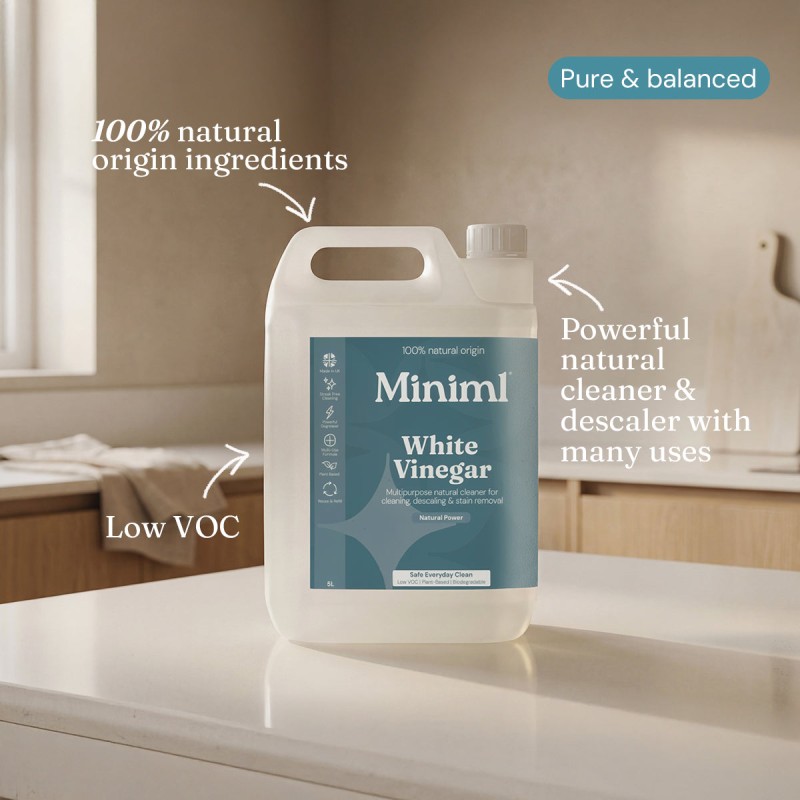
Cleaning vinegar contains around 6% acetic acid, making it stronger than vinegar used for your chips! Therefore it’s excellent for cleaning, but also to remove limescale and odours.
How to use cleaning vinegar
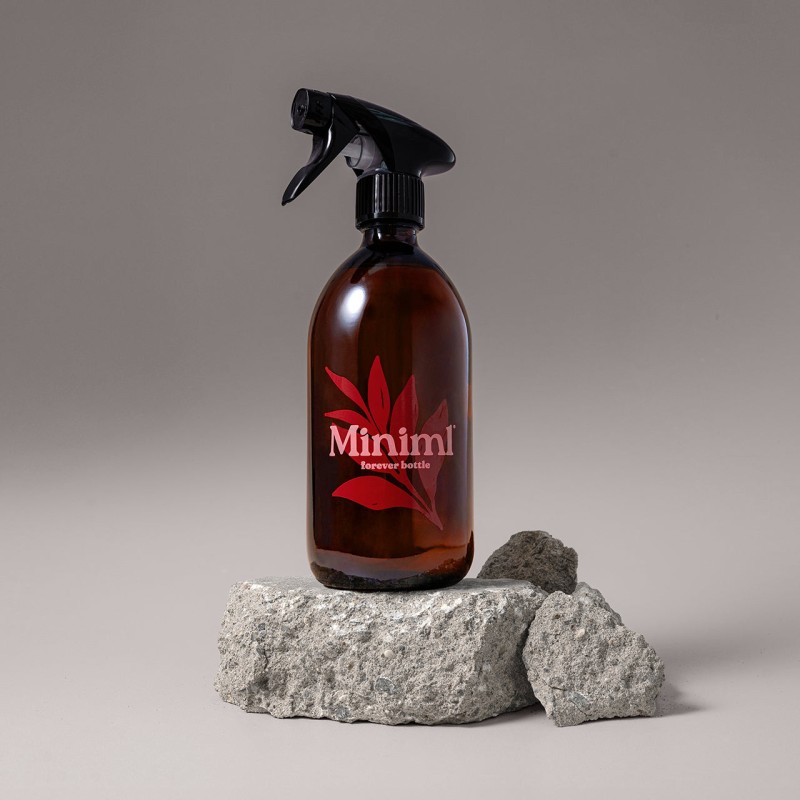
- All-purpose spray. Mix 250ml of cleaning vinegar with 250ml of water in a spray bottle. Spray onto surface, leave for 1/2 minutes, then wipe with cloth. If sticky, wipe with clean water.
- Remove limescale. Mix 300ml of cleaning vinegar in a bowl with 100ml of warm water, and apply to taps and shower heads. Leave for 5/10 minutes, scrub gently, then rinse with clean water.
- Clean sinks. Spray diluted cleaning vinegar around the sink, leave for 2 to 3 minutes, then wipe (in direction of grai). Rinse well and dry with a cloth, to prevent water marks.
- Freshen bins. Wipe area with a mix of 50ml cleaning vinegar and 450ml water. Allow to air dry. The ‘vinegar smell’ will disappear as it dries.
- Prevent drain odours. Pour a small amount of diluted vinegar around the edges. Leave for a few minutes, then flush through with hot water.
- Remove limescale from kettles. Fill kettle halfway with a mix of 250ml of cleaning vinegar and 250ml water. Heat until close to boiling, then switch off. Leave for 15 minutes. Empty and rinse , then boil several full kettles of fresh water, to remove taste and smell.
- Fabric softener. Add 30ml of cleaning vinager to fabric softener compartment of washing machine.
- Clean washing machine. Add 250ml of cleaning vinegar to detergent drawer and run an empty wash cycle at 60 to 90 degrees C. Allow cycle to finish, then wipe around door seal.
Citric acid (a natural limescale remover)
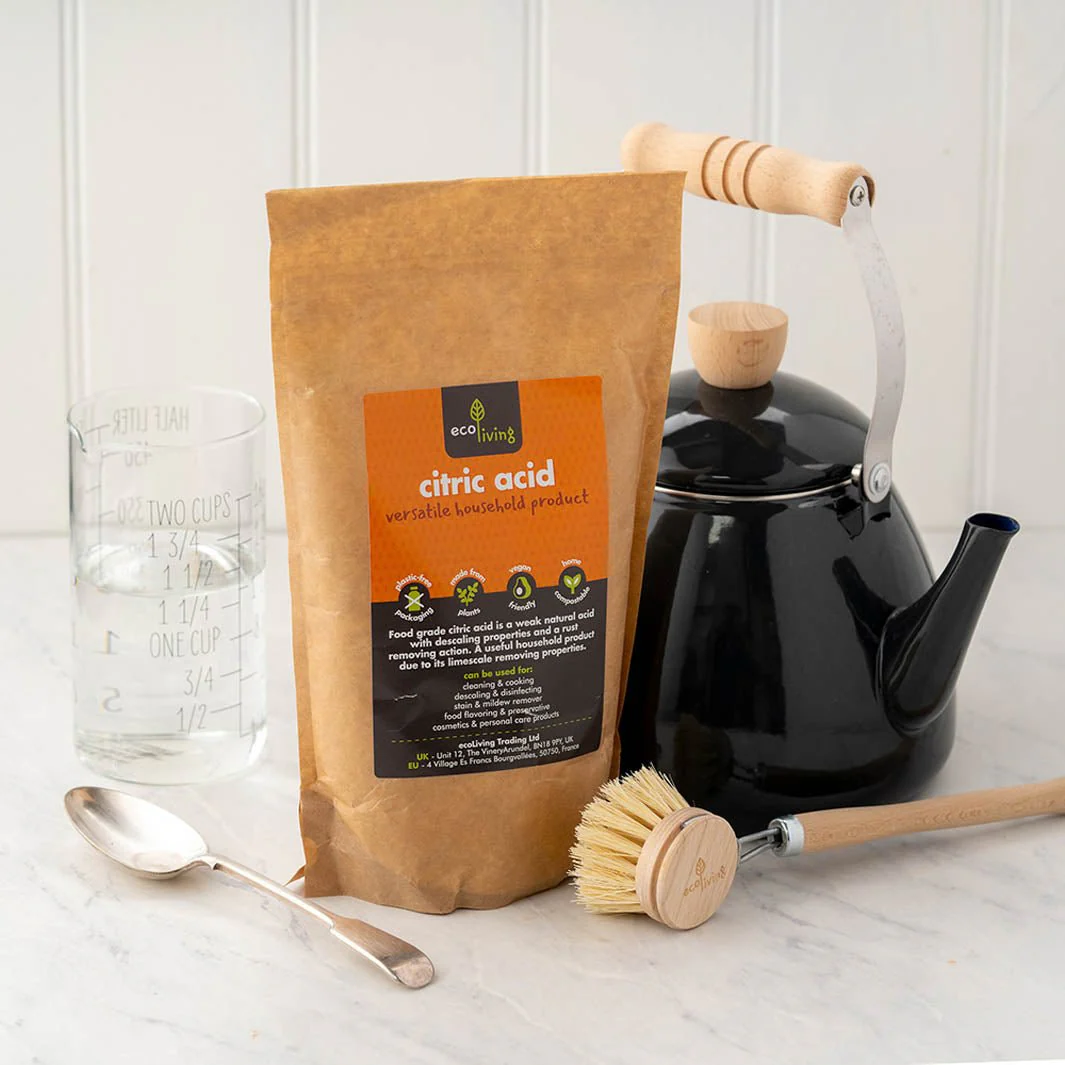
This paper resealable pack of citric acid is the ideal alternative to chemical limescale removers. Citric acid is a weak natural acid with descaling properties and can also remove rust. Avoid citric acid on granite or marble, as acidity could etch and dull polished surfaces.
Wear natural rubber gloves and old clothing, wash hands after use. Keep away from eyes, children and pets (citrus is toxic to animals).
If you have toxic household cleaners at home, you can recycle empty bottles at kerbside. For bottles with product inside, don’t pour down drains. Take to your council’s hazardous waste department.
To descale a washing machine
Add 1 cup of citric acid to an empty drum, then run a standard cotton cycle at 60 or 90 degrees C to dissolve scale.
Run an extra rinse and spin to clear out loosened debris.
To descale a kettle
Bring a kettle of boil to boil, then add 1 to 2 tablespoons of citric acid to hot water and stir until dissolved. Let it sit for 15 to 30 minutes. It may fizz as it breaks down limescale.
Pour out and rinse with fresh water, boil once more before using again.
To descale a coffee maker
Dissolve 1 to 2 tablespoons of citric acid in a full reservoir of water. Run solution through a standard brew, then run 2 to 3 more cycles with fresh water.
To descale taps and showerheads
Mix 2 tablespoons of citric acid in a cup of warm water. Dip a clean plastic-free cloth in the mix and wrap around the tap (or pour into a silicone bag and secure over the showerhead).
Leave for 20 minutes, scrub gently and wipe clean.
Use to remove rust
Wash off loose dirt, oil and grease with dish soap, so acid can react with rust direct. Dissolve 2 to 4 tablespoons of citric acid per gallon of hot water in a bucket or tub.
Submerge the rusty metal in the warm solution. It will bubble and react. Check every 30 minutes then scrub away loose dust.
Noah’s citric acid (natural limescale remover)
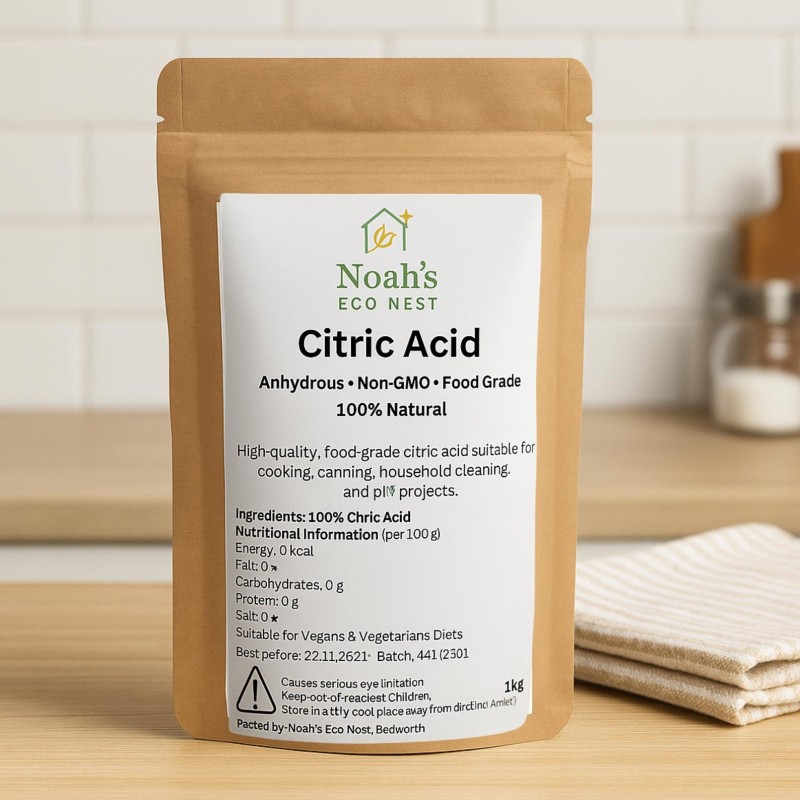
Noah’s natural citric acid (descaler) is sold in an easy-to-recycle Kraft paper pack. With a resealable zipper, to keep moisture out. This food-grade citric acid (a weak natural acid that can remove limescale and rust) is perfect for natural cleaning and descaling. Avoid for granite or marble.
Wear natural rubber gloves and old clothing, wash hands after use. Keep away from eyes, children and pets (citrus is toxic to animals).
To descale a washing machine
Add 1 cup of citric acid to an empty drum, then run a standard cotton cycle at 60 or 90 degrees C to dissolve scale.
Run an extra rinse and spin to clear out loosened debris.
To descale a kettle
Bring a kettle of boil to boil, then add 1 to 2 tablespoons of citric acid to hot water and stir until dissolved. Let it sit for 15 to 30 minutes. It may fizz as it breaks down limescale.
Pour out and rinse with fresh water, boil once more before using again.
To descale a coffee maker
Dissolve 1 to 2 tablespoons of citric acid in a full reservoir of water. Run solution through a standard brew, then run 2 to 3 more cycles with fresh water.
To descale taps and showerheads
Mix 2 tablespoons of citric acid in a cup of warm water. Dip a clean plastic-free cloth in the mix and wrap around the tap (or pour into a silicone bag and secure over the showerhead).
Leave for 20 minutes, scrub gently and wipe clean.
Use to remove rust
Wash off loose dirt, oil and grease with dish soap, so acid can react with rust direct. Dissolve 2 to 4 tablespoons of citric acid per gallon of hot water in a bucket or tub.
Submerge the rusty metal in the warm solution. It will bubble and react. Check every 30 minutes then scrub away loose dust.
Where to recycle toxic cleaning liquids
You can recycle empty bottles at kerbside. For bottles with product inside, don’t pour down drains. Instead take to your council’s hazardous waste.