How to Improve England’s Public Parks
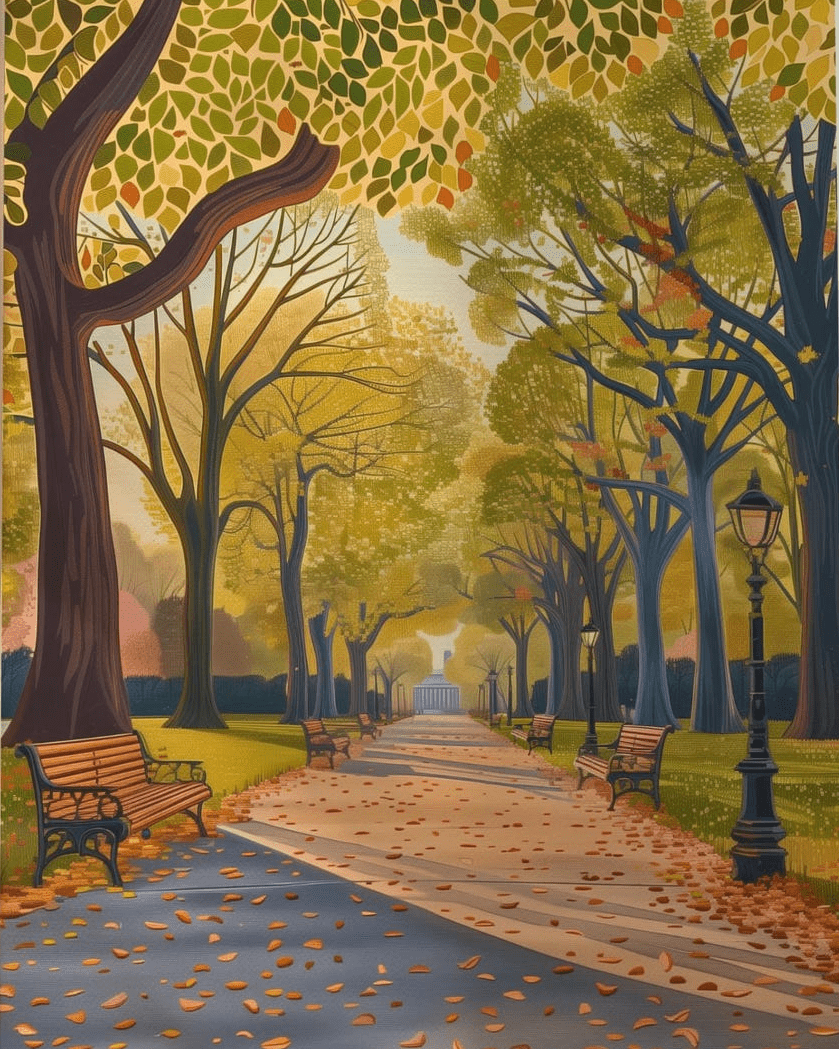
Hyde Park is a sprawling 350 acre green space in the centre of London, wiht quiet meadows to escape from the roar of city traffic. A former hunting ground for Henry VIII (he took it from monks at Westminster Abbey), it’s been open to the public since 1637.
Serpentine Lake divides Hyde Park from its neighbour Kensington Gardens, which combined cover 620 of green space.
Out walking? Follow the Countryside Code to keep all creatures safe. Keep dogs away from steep banks, mushrooms (and other toxic plants/trees) and on leads during nesting season (and near barnyard friends and wild ponies).
Did you know many trees (including yew, oak and sycamore) are unsafe near horses? Also keep conkers away from dogs. Councils should not plant flowers in railings, as deer can get stuck in them.
Hyde Park is also known for its Speakers’ Corner, where since 1872 a small plot of ground has served as a global symbol of free speech. On Sundays, many people debate politics, philosophy and religion to anyone who will listen!
A tragic history (and one recovered horse)
The park also has a tragic history, when an IRA bomb killed not just horsemen, but seven innocent horses – a shameful spectacle that appalled Irish people too.
One horse who survived was Sefton, who after extensive surgery became a national symbol of resilience, receiving thousands of get-well cards from the public. The public also donated a collective £620,000 which funded the Sefton Surgical Wing at Royal Veterinary College.
Sefton recovered and enjoyed a long retirement at The Horse Trust, before dying of old age at 30.
Hampstead Heath (an 800 wild park in London city)

Hampstead Heath is an 800 acre wild park in North London, which includes rugged landscapes and ancient woodlands, and some of London’s best views. Managed by the City of London, it’s just four miles from the centre. A green oasis for people who live in the capital.
Hampstead Heath is home to three natural bathing spots, which are popular for wild swimmers. It also features Parliament Hill, a legally protected viewpoint from where you can see St Paul’s Cathedral.
Kenwood House is a neo-classical villa on the northern edge, which you can view world-class art for free. And nearby Hill Garden is a hidden Edwardian treasure that has raised walkways covered in climbing plants.
We recommend avoiding the zoo, as you can conserve animals without caging animals.
The nearest tube stations are Hampstead or Belsize Park (northern Line).
Out walking? Follow the Countryside Code to keep all creatures safe. Keep dogs away from steep banks, mushrooms (and other toxic plants/trees) and on leads during nesting season (and near barnyard friends and wild ponies).
Did you know many trees (including yew, oak and sycamore) are unsafe near horses? Also keep conkers away from dogs. Councils should not plant flowers in railings, as deer can get stuck in them.
Dogs are allowed in most parts of Hampstead Heath, but follow the rules for those where they are not permitted, and keep on leads if not trained or in unsafe areas. Also avoid toxic plants and trees. A license is required for professional dog walkers.
Toxic chemicals from flea medicine in ponds
A recent study by Imperial College London found that one dog-swimming pond contained chemicals dangerous to aquatic life, possibly from pesticides used in parasite treatments for flea and tick infestations, from ‘spot on formulas’ and flea collars.
Obviously it’s important for pets to be flea-free, but these chemicals have been banned for agricultural use since 2018, due to harming bees, dragonflies and other insects.
Vet Dr Rosemary Perkins (from University of Sussex) says that many vet associations now recommend against routine blanket parasite treatment, saying it’s best to monitor and treat only when necessary.
Interim solutions are to vacuum frequently, wash bedding in hot water (unscented laundry detergent), restrict access to high-risk areas and use a quality comb to check ‘flea dirt’ (only treat if evidence found).
The Guardian reports that many are asking vets to stop profiteering from (sometimes) unnecessary flea treatments, which is killing insects and songbirds. One monthly flea treatment for a large dog contains enough imidacloprid to kill 25 million bees.
One biology professor asks ‘we don’t treat children with nits unless they have them?’
One nurse who was being pushed to pay for monthly flea treatments, switched to a smaller independent vet less interested in profit, and now only prescribes medicines when they are needed.
Finding Dog-Friendly Parks (and secured runs)
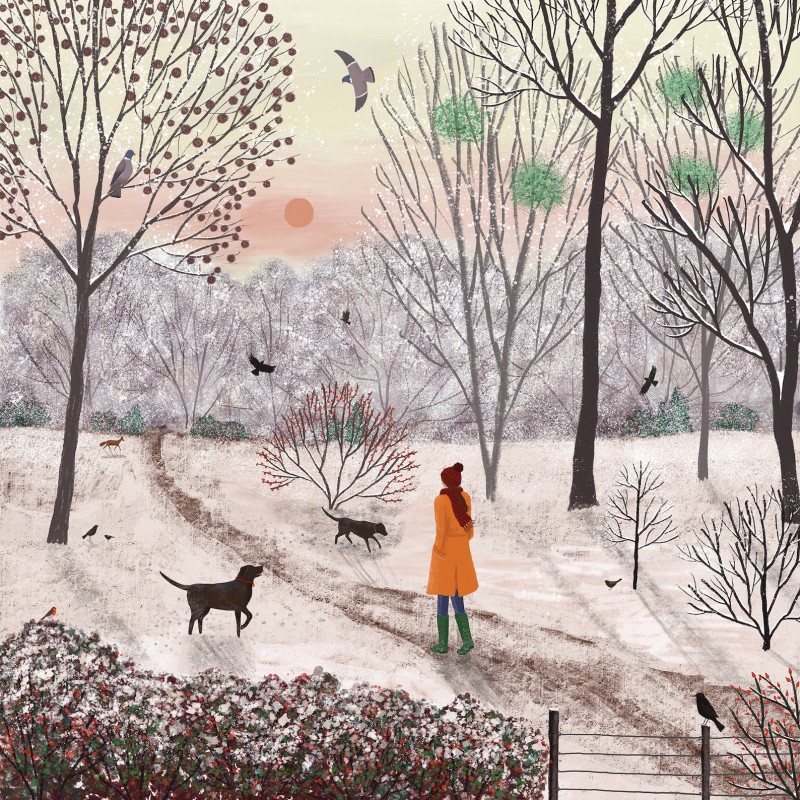
Unless you have a large garden, it’s likely you want somewhere nice for your dog (or dogs) to enjoy fun and exercise. Obviously there are woods and beaches, if you live near them and dogs are allowed.
But with around half the population having dogs (and some councils banning dogs from parks or insisting they are on leads), it’s interesting to look at alternative ideas that are up-and-running.
Dog-friendly public parks
All councils ban dogs from children’s playgrounds, sports areas and fenced wildlife areas, and many require dogs to be on leads in specific areas. Others have limits on how many dogs can be walked by a single person.
The main reasons that dogs are sometimes banned from public parks are due to unsocial behaviour and guardians not picking up poop. These are easily solved with humane dog training and providing more dog bins with free bags (it’s human nature for people to sometimes forget).
The cost of installation is less than hiring staff to pick up poop, after the event. Some parks have overflowing poop bins, so the onus is on councils to employ people to empty them more often.
Many flowers (including all bulbs) are toxic to dogs. So town planners should learn about pet-friendly flowers, mulch and landscaping choices.
Keeping dogs safe in public areas
- Always follow the Countryside Code to keep all creatures safe.
- Always check for dog beach bans, before visiting. Read how to keep dogs safe by the seaside.
- Read how to keep dogs safe in snowy weather.
- Don’t let dogs run for at least two hours before and after food (and car travel) to help prevent risk of bloat.
- Keep dogs away from ponds (usually banned anyway for their safety due to blue-green algae).
- If dogs roll in poo or have salty fur, learn how to give dogs baths.
One idea in some towns is to create separate ‘senior dog parks’. This enables older dogs who are nervous, slow, shy or even blind, to enjoy a potter without concern for more boisterous dogs. This enables all dogs to have fun, without one type accidentally scaring the other!
Secured dog runs (a good business idea?)
Secured dog runs are becoming more popular, as public parks in some areas are not as dog-friendly. These are good for people with lack of access to green space, and useful for dogs that are not social or have poor recall.
Most are double-gated with high fences (creosote is illegal to use now), and usually hire out spaces by the half-hour, with covered areas to shelter in poor weather. This enables dogs to have a good run without fear of bumping into other dogs if this is of concern, and not being near sheep or traffic.
Some of note to inspire include:
- The Dog Run (just outside London) only accepts wormed dogs with up-to-date vaccinations. XL bully owners need proof of exemption certifications and public liability insurance.
- The Londog offers reviews of local enclosed parks, used by ex-racing greyhounds to dogs freaked out by noise of other dogs.
- Terrific Bark Park (Buckinghamshire) is a paddock surrounded by woodland on a private estate.
- Foxes Farm Fields (Essex) has 12 outdoor locations and 1 indoor barn.
- British Dog Fields lists spaces for UK and Ireland. It also offers consultancy services (including farmers who wish to make income from unused land, away from barnyard animals).
Ecotribo Public Park Benches (from fishing waste)
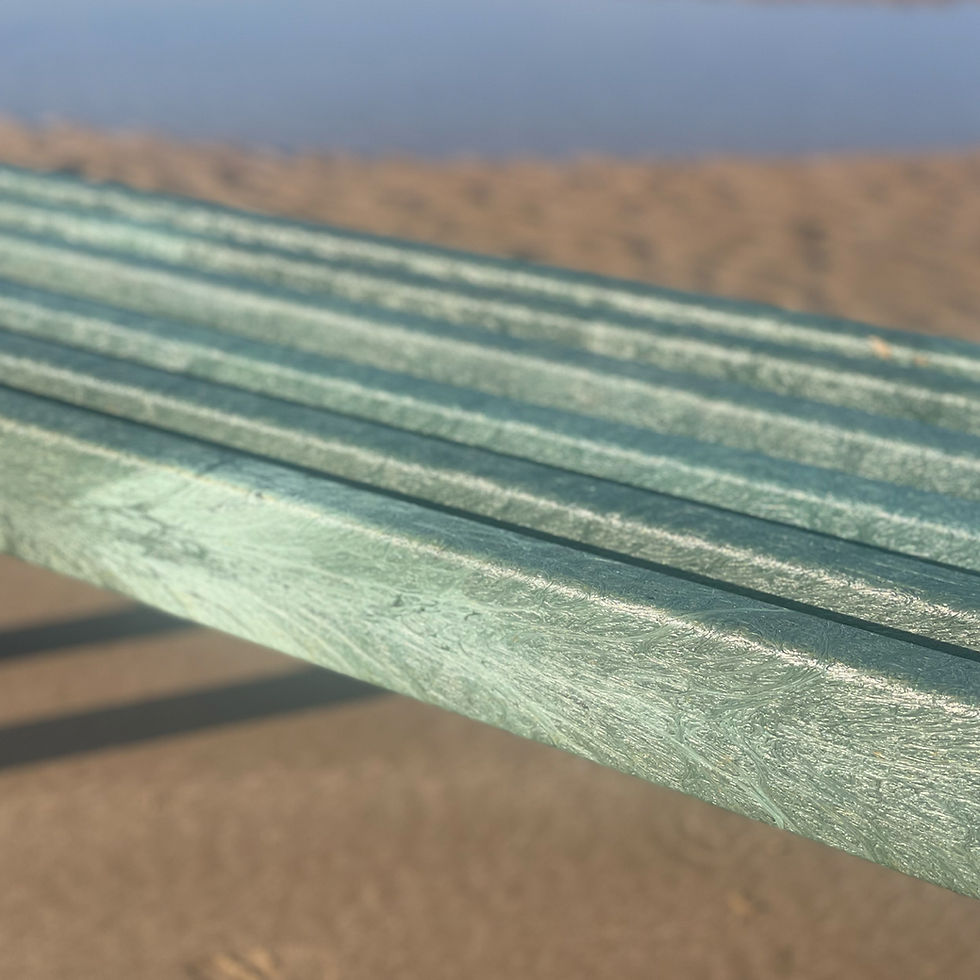
Ecotribo makes lovely park benches, made from recycled ghost fishing waste. These are sold in 2 designs in a range of colours, and very durable in wet weather (just wipe clean now and then, and they’ll last for years).
Ghost fishing waste is the ropes, lines and nets left behind from fishing boats, either deliberately thrown overboard or more likely, simply lost in storms and detached from boats. It causes hundreds of thousands of deaths each year to seabirds and marine creatures. So removing it to make other items is a wonderful idea. They also tend to be naturally coloured in blue or green.
For park planning, read about pet-friendly plants (avoid bulbs and conkers near dogs). And learn of trees to avoid near horses (including yew, oak and sycamore).
Benches made from recycled plastic milk bottles
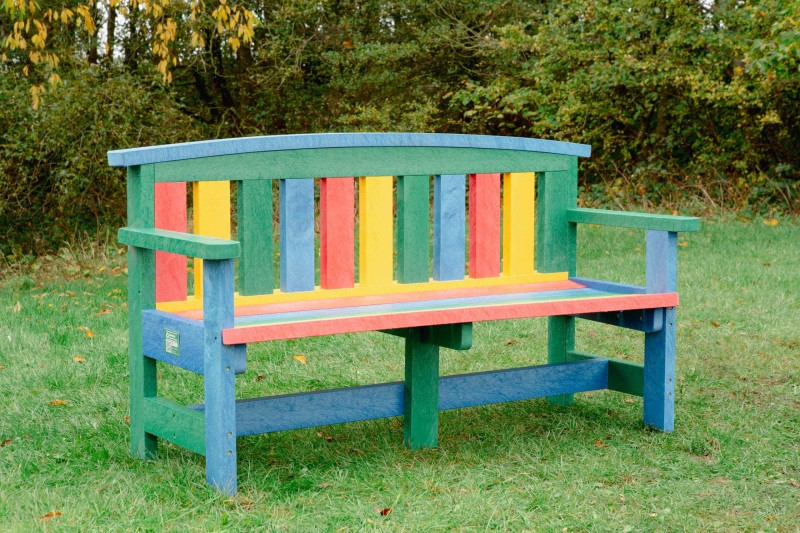
Marmax Products makes also makes park benches (this time from recycled plastic milk bottles), along with other items like litter bins (including dog poop bins) and path posts (just assemble with a spanner).
These are colourful and resistant to rain and rot, sold with 25-year guarantees (wheelchair-friendly options are also sold). There are even wheelchair-accessible picnic benches and platforms for wildlife ponds.
We like the Goal Wall that is better than football nets (which can tangle foxes and other wildlife, when not stored away).
We don’t recommend the recycled plastic birdhouses (these could overheat, choose ones made from untreated wood instead – learn more on how to buy and site bird houses).
Inspiration from Abroad: How Central Park is Litter-Free
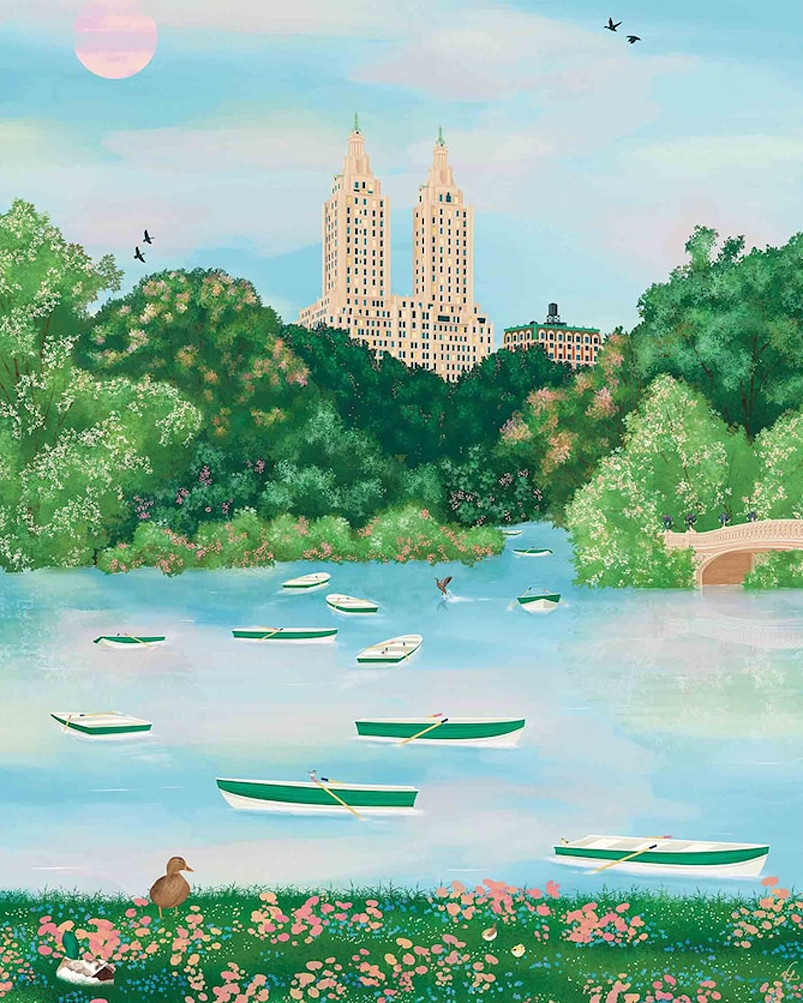
Central Park is one of the world’s biggest city public spaces, home to many birds and wildlife, and popular with millions of residents and tourists. Yet incredibly, it’s also practically litter-free. So what can we learn from the park that was actually inspired by England’s first public park in the city of Derby?
It wasn’t always like this. In the 1970s, Central Park was heaving with litter (it was also quite dangerous with lots of crime, but no more). And recently, it has banned horse-drawn carriages, after years of campaigning for horse welfare (there are many road accidents).
Read about pet-friendly plants (avoid bulbs and conkers near dogs). And learn of trees to avoid near horses (including yew, oak and sycamore).
Good trash cans and better collections
- Central Park has over 700 patented aluminium trash cans that are designed to not let ‘rubbish fly away in the wind’ like in England’s parks. Staff collect over 1300 tons of trash each year, and with high recycling rates. Electric carts are used to collect 8 tons of trash daily.
- The park is divided into around 50 10-acre zones. Each garden is responsible for both litter removal and horticultural upkeep, with signs to discourage visitors from bringing plastic into the park, to stop wildlife injuries or entrapment.
- Litter bins are not situated in the middle of landscapes or high-traffic areas, to minimise rodent access. Local stations process mixed waste asap to reduce odour and prevent scavenging overnight.
- Volunteers use bagsnaggers (telescopic poles) that remove snagged plastic bags from trees or rivers.
What England can learn from Central Park
England does not really have a park to compare. London’s Regent’s Park is around half the size. While Richmond Park and Birmingham’s Sutton Park are around twice the size of Central Park.
Despite the ongoing Birmingham bin strike (where people live with rats and volunteers have to send rubbish to landfills themselves), one mother recently was fined £150 for dropping a kale leaf in a shopping trolley, while gathering food for vulnerable people.
Although Richmond Park has strict laws on litter, these are not always adhered to. Councils are responsible for clearing up litter (no matter who dropped it) on public land. Report any you find to Fix My Street. And for private land, they can serve Litter Abatement Orders (if not complied with, they can issue fines or clear the litter and issue invoices to bill landowners).
Richmond Park is of course known for its wld deer, that frequently mistake dropped rubbish for food. Stags can also get plastic rubbish tangled in their antlers. Common littered items are disposable blue face masks (always snip the ear strips before disposal if you find any), and blue hydration gel (dropped by cyclists – some deer have died from eating it).
Other hazards are plastic bags, balloons and plastic beer rings (again snip or rip them up before found, before disposing in covered bins – same with elastic bands and hair ties or anything with a ‘circular hole.
The Isabella Plantation bursts colour each spring and summer (Azaleas and rhododendrons (toxic to dogs) line the winding paths.
Alternatives to culling deer?
Richmond Park culls deer, saying venison profits help fund Wildlife Officers. And says contraceptives would cause stress through rounding up/fencing (and could impact male deer and other wildlife). And says this is done to avoid starvation. But a Freedom of Information Act found profits are huge, some it’s just a ‘glorified farm’. Deer contraception appears to be working well in the USA (with some caveats).
Other deer have died from litter, collisions with cyclists, becoming trapped in fencing, cables and rope and even a calf abandoned due to someone picking it up. Read more on how to co-exist peacefully with deer.
Councils should not plant flowers in railings, as deer (that eat floewrs) can get stuck in them.