How to help wild owls (hoot if you care!)
Owls are mysterious birds with eyes that face forward, and can turn their heads 270 degrees to hunt prey. Owls have three eyelids (one to blink, one to sleep and one to wash the eye). Most have one wing higher, so they can fly silently (the feathers breaking turbulence into smaller sound currents).
In order to eat around 4 voles, shrews, rabbits and rats each night. Owls catch prey with their sharp talons (their toes face different directions for better hunting).
And if anyone knows anything about anything – it’s Owl who knows something about something. Owl is the grand and rather clever old man of the forest. He can also spell Tuesday. A A Milne (Winnie-the-Pooh)
England’s countryside is home to five main wild owl species:
- Barn Owl: These pale, heart-faced owls glide over grass fields at dusk and rely on rough grassland, wild roadside verges, and open fields for hunting voles and mice. Barn owls nest in old barns, tree hollows or nest boxes. They have a screech that ornithologist Matt Sewell says can strip your fingernails!
- Tawny Owl: They have round faces and deep ‘twit-twoo’ calls, and love old woodlands, parks and even large gardens. They need tree cavities for nesting and hunt at night for small mammals and birds. Pairs often stay together for life and defend their patch fiercely.
- Little Owl: These live on farm fields, hedgerows and orchards and often use holes in trees, old barns, or stone walls for roosting and breeding. They eat insects, worms, and sometimes small birds. Their call is like a dog barking!
- Long-eared Owl: These have tall ear tufts and roose in dense hedges and thick woodland, hunting at dusk over farm land. They gather in small groups in winter and call ‘hoo hoo hoo!’
- Short-eared owls are also mottled brown. They call ‘boo boo boo!’
How to choose, install and clean owl boxes
These are good, but know what you’re doing. Owls don’t build nests like other birds, and owls also sit on pellets (not straw), so nest boxes could become waterlogged.
- Barn Owl Trust has advice on how to choose, build, buy and site owl boxes, whether you do this indoors (like a barn) or on a tree. It says the nest box is only as good as the land surrounding it.
- These barn owl nestboxes are designed with Barn Owl Trust, to stop owlets falling out, and protect from bad weather.
- Safe cleaning is important to stop pellets building up, or owlets could climb out too early.
Only clean nest boxes after the breeding season. Remove debris and potential parasites (wear gloves). And use boiling water only to clean, then air-dry.
You can’t disturb owls or owlets, unless a licensed wildlife worker.
It sometimes takes a year or two for owls to move in, but patience pays off. If you work with neighbours or your local school, several boxes across your area can really boost local numbers.
How to help orphaned or injured owls
- Barn Owl Trust has info. Monitor closely first, as parents are usually nearby. The site shows how to pick up a live owl, and check for injuries.
- Barn owls on the ground need help, so call local wildlife rescue, Raptor Rescue or Suffolk Owl Sanctuary’s emergency helpline.
- The Owls Trust also advice if you find baby owls (not always orphaned, just testing their wings). If tawny owls are okay but no parents are nearby, place safely in a high tree branch). Place ‘little owls’ back in nests, or near where you found them, if safe.
- Wear gloves to place in ventilated boxes (avoid towels with tassels).
- Grasp gently (feet are more likely to get you than beaks!)
- Keep in a quiet area at room temperature, until help arrives.
How farmers can help wild owls
Farmers often have barns, so it’s more than likely you have wild owls residing somewhere on your farm. As these bird are now endangered due to lack of habitats, there are quite a few things you can do to help!
Also read how to stop birds nesting in chimneys.
Owls (like all creatures) need water, but deep troughs can be deadly for young or tired birds. Barn Owl Trust has tips to keep owls safe from open troughs and containers with over 120mm of water, and teaches how to make a float that lasts years (wood won’t work, as it sinks when waterlogged).
- Read how to manage land for barn owls (Barn Owl Trust).
- This wildlife trough includes a valve to prevent freezing (and lets small creatures escape).
- Two ideas are stock troughs (don’t get waterlogged) and FrogLog (a weighted inflating platform from a wildlife biologist, for small creatures to escape from pools).
- Stone edges/safe borders: Line with stones, bricks, or rough edges so owls can grip and escape if they fall in.
- Rain Barrels with Ramps: Fit a floating plank or a sturdy ramp inside the barrel, so creatures can escape.
- Regular checks: Every week, walk round troughs and ponds (with sloping sides) to check ramps are in place, and nothing is blocked/broken.
- Create a shallow wildlife pond with sloping sides so owls and hedgehogs can drink and bathe safely. Set up old washing-up bowls at ground level, half-buried for stability.
Barn owls are protected by law from disturbance during nesting (from when the egg is laid until the last dependent stops returning to the nest). Penalties include fines up to £5000 or 6 months imprisonment.
Deter rodents naturally (to avoid poison)
- Owls eat rats, so avoid rat poison. Deter rodents by not leaving out food (nor composting animal foods). Be tolerant of natural predators like owls (and foxes).
- These are better solutions than terriers (dogs may ingest rat poison or get intestinal worms/toxoplasmosis).
- Live rat traps often cause long deaths (and leave babies behind).
- RatMesh (is a stainless steel version of an invention to deter mice. Do not cover air vents or gas appliances (this can block with dust, leaves or dirt, and cause CO2 poisoning).
- Gardener Ellen Christine says try planting mint, lavender or rosemary (avoid toxic plants near pets). She says organic mulches (wood chip or straw) may encourage rodents, as hiding places.
Make roads safe for owls
To prevent the thousands of owls killed on roads each year, Barn Owl Trust says it’s best to do one of the following:
- Plant high hedges or lines of closely-spaced trees, next to road surface on both sides.
- Plant trees 3-4 metres back from the road edge, allow side branches to reach within 1 metre of the road service.
- Allow road verges to become covered in tall ‘scrub’.
- Don’t place nest boxes within 1km of major roads, have continuous screens on both sides.
Small wetlands attract insects, a top food source for birds and bats, so will drive them away from urban areas. Linking woodlands, ponds and hedges helps wildlife move from place to place, without encountering road traffic.
If building work is planned, work with wildlife experts to know when to delay tree cutting or ground clearance (until after breeding times). Using noise barriers and dust control can limit impact on nesting birds and foraging bats.
- Read how to manage land for barn owls (Barn Owl Trust).
- It’s a worthwhile £300 for planners to take their training course (includes the Barn Owl Conservation Handbook. Chris Packham says every council should have a copy, so one staff member can become a ‘barn owl agent’.
- Report dead owls, using six-figure grid references.
Barn owls are protected by law from disturbance during nesting (from when the egg is laid until the last dependent stops returning to the nest). Penalties include fines up to £5000 or 6 months imprisonment (per bird, nest or egg).
How churches can help wild owls (and bats)
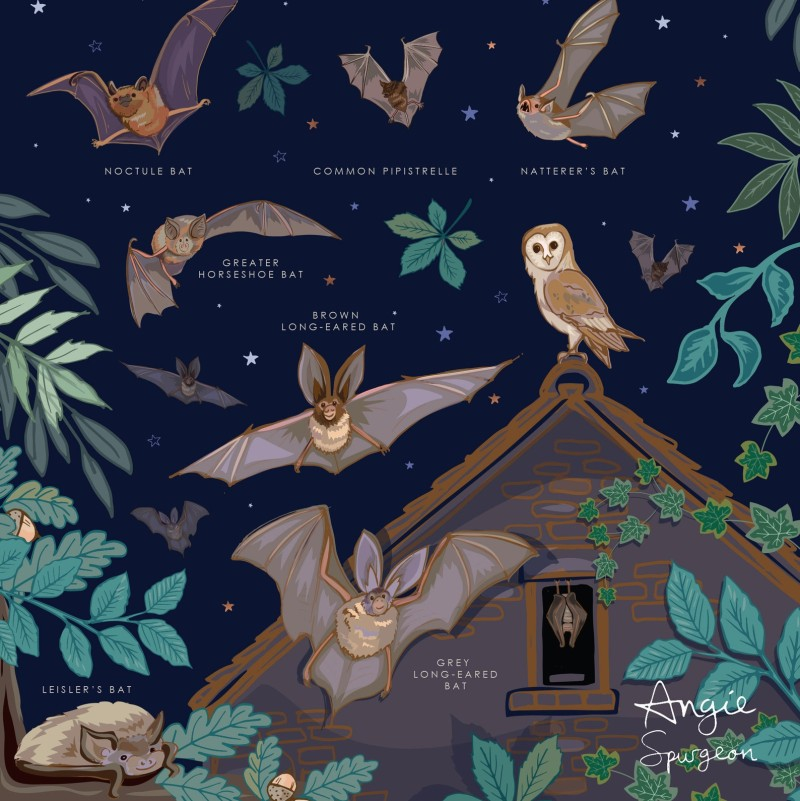
England has almost 40,000 churches, many of them ancient buildings with old eaves and barns, and thick-leaved trees with big branches. These are ideal natural habitats for England’s bats and owls.
Both species are at risk, due to lack of natural habitats. All need food, shelter and habitats to hide, breed and sleep (bats hibernate in winter).
As ancient hedgerows and old barns have disappeared, old churches play a huge part in providing sanctuary to both species. You often have exactly what these lovely creatures want! And then some!
From churchyards to belfries and from cemeteries filled with trees, places of worship provide ideal quiet sanctuaries for both nocturnal species.
Churches are pretty quiet also during the week, and can act as proper wildlife corridors for both rural and urban areas.
- Avoid pruning or cutting down old hollow churchyard trees during spring nesting season (ideally don’t cut them down at all).
- Barn Owl Trust is the site to visit, to find out how to help owls and safely set up and clean owl boxes. And what to do, if you find an injured owl.
- Fix specialist nest boxes inside church towers and belfries, or high up on mature trees.
- Leave areas of graveyards uncut, this creates a nature in balance where owls can hunt for mice, rats and voles.
- Never use rat poison (a natural food source for owls).
Read how churches can help wild bats
Don’t keep wild owls as pets
Barn Owl Trust does not agree with keeping owls as pets. They are wild birds (and unlike dogs, have no loyalty). They may see you as a potential mate, can be aggressive and will happily leave you to the next person providing food, no matter how much you love her or him!
This is why falconry owls can get tangled in ‘leather strips’, when they try to fly off.
Good books to learn more on owls
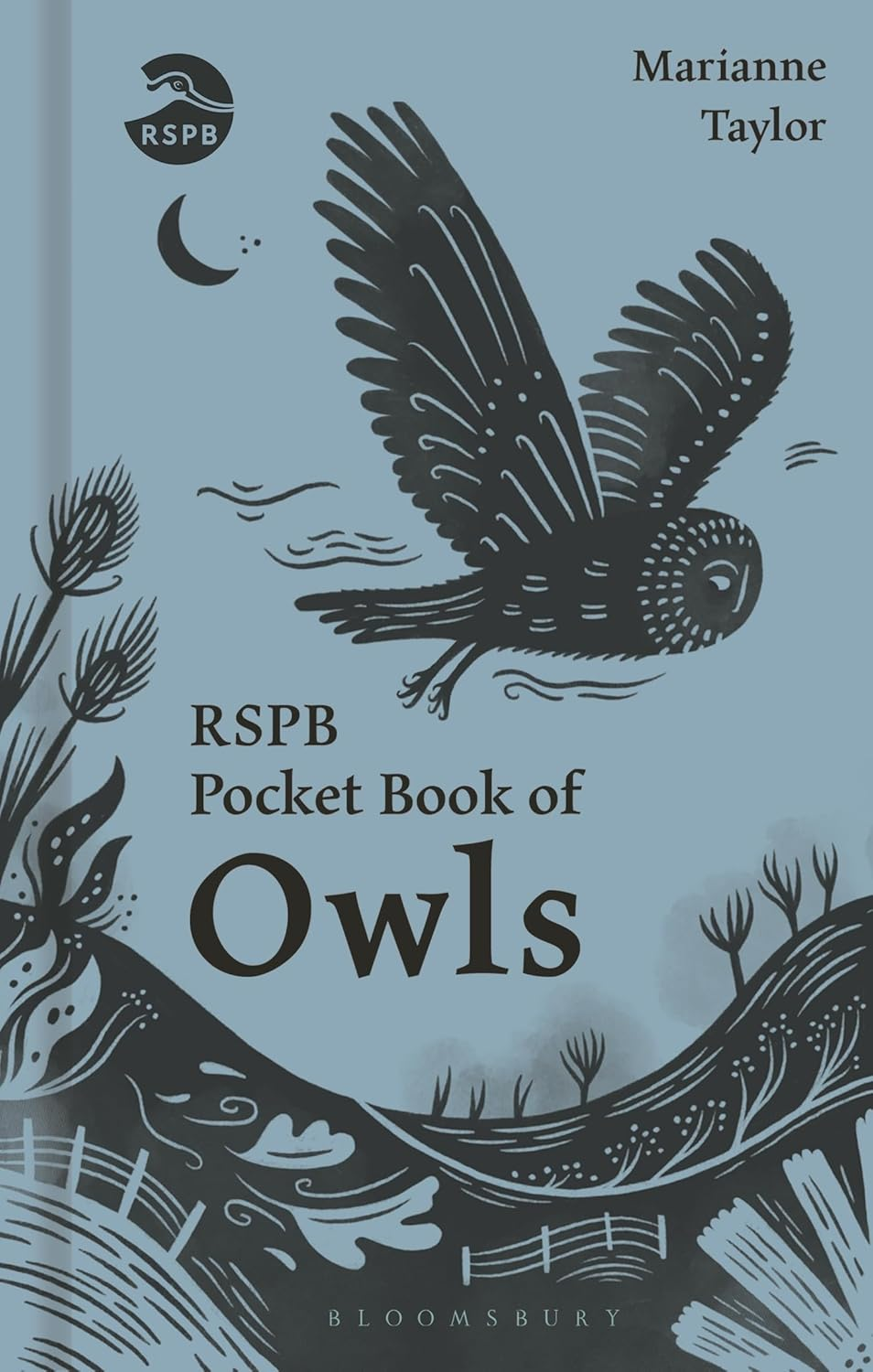
The RSPB Pocket Book of Owls is a charming gift book with line illustrations, to celebrate some of the world’s most mysterious and admired birds – owls. With their wide-eyed and endearing faces, owls have secretive lives, haunting voices and astonishing super-senses!
In this book, a wildlife writer and illustrator weaves together biology, mythology and cultural history to explore how owls live, and why they intrigue us so deeply.
Marianne Taylor is a wildlife-watcher who lives by the sea in Kent, and works as a freelance writer, photographer and illustrator (she is particularly fond of sea birds). A wild swimmer, she has impressive tolerance to cold!
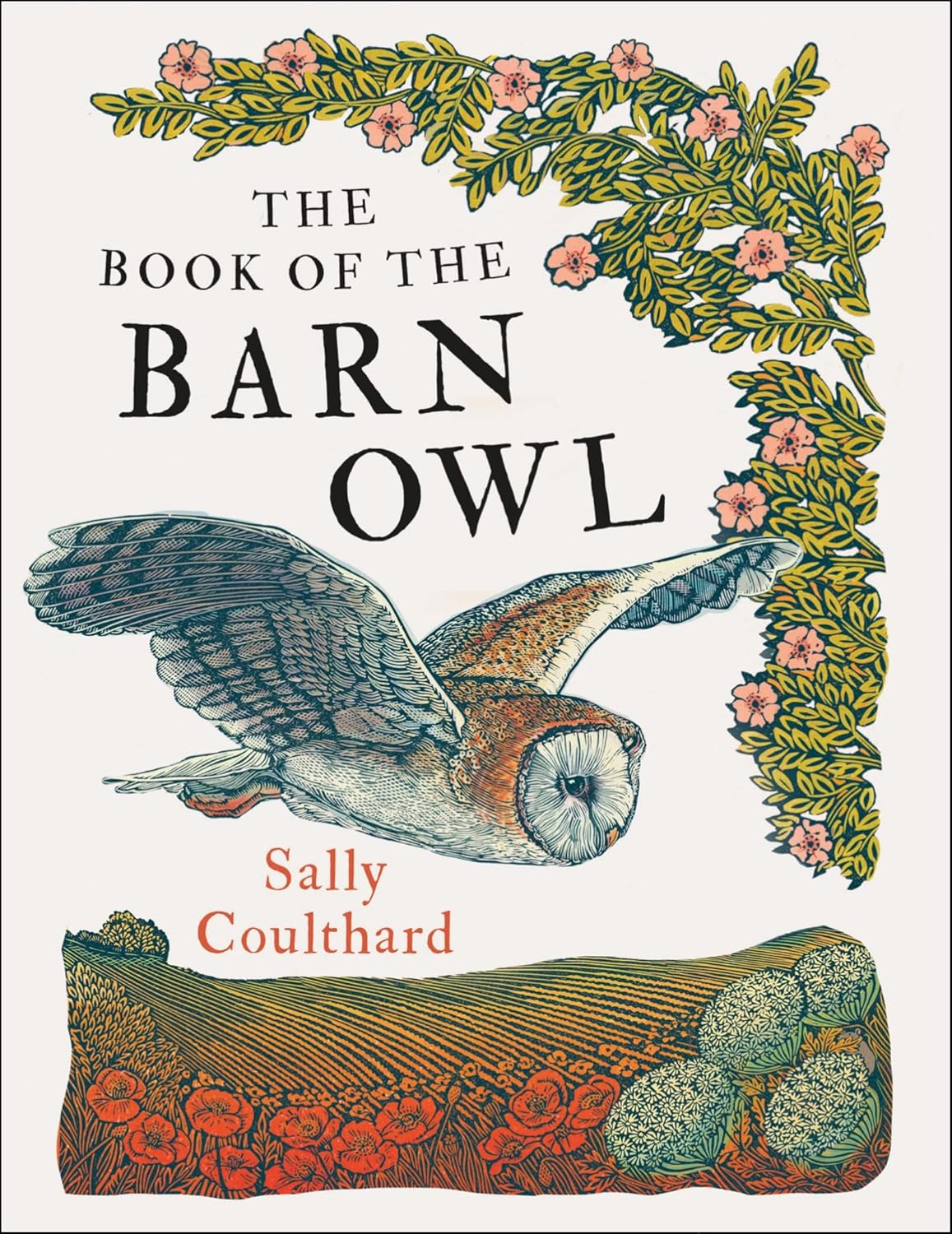
- The Book of the Barn Owl is a beautiful book packed with tips on how to help our heart-shaped faced-friends. Written by Yorkshire wildlife and nature writer Sally Coulthard. Discover the interesting life of this enigmatic bird. From first pip of the shell, to leaving the nest. The book is endorsed by Barn Owl Trust.
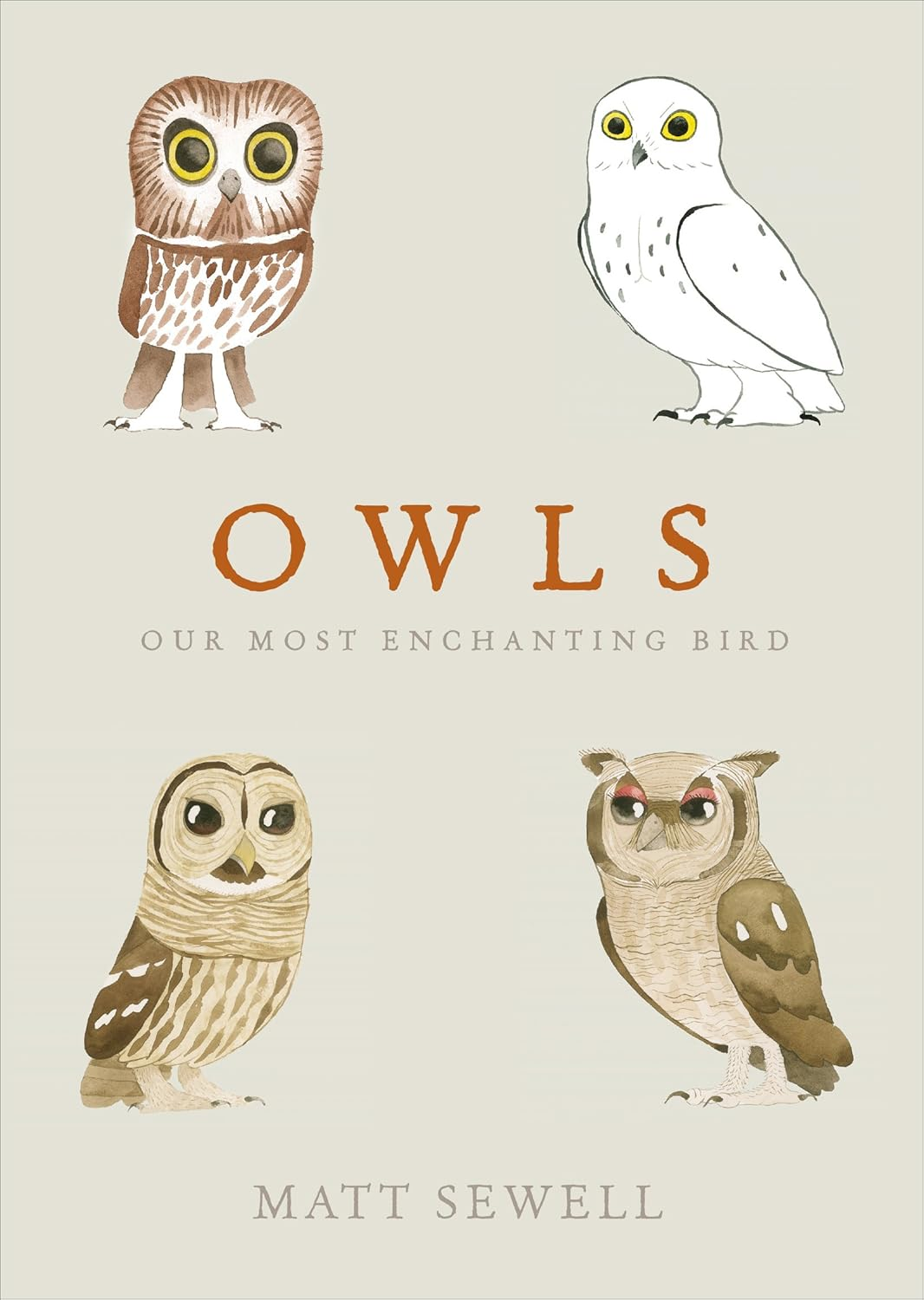
- Owls: Our Most Enchanting Bird is a beautifully illustrated book for adults or children, by ornithologist and artist Matt Sewell. The 50 hand-painted owls include owls from over the border like tiny elf owls.
- The Owl: A Biography is by a man who teaches nature writing at Bath University. Meet all native species of owls, along with a couple of ‘northern owls’ (the snowy and eagle owls). Learn how an owlet hatches, then grows to hunt prey and raise the next generation.
- What An Owl Knows is a charming read, giving an intimate glimpse into the lives of these magnificent birds. From evolutionary quirks behind their silent flight and rotating heads, to their romantic relationships and parenting styles, this brings the rich natural history of owls to life.
- The Company of Owls is a ‘nocturnal love song’ to tawny owls, who live in the garden of the author’s Cumbrian home (in the same town where poet Wordsworth hails from).
Each night, the owls come down to her cottage at dusk, calling out as night falls. In particular, a trio of owlets she watches grow from fledglings, to young adults.
I am sure she knows that I am not a threat, and that is why she ignores me. I am sure she recognises me and Will, that it shows in the shake of her head. A slow blink that says ‘you again?’ Before she turns and gets on with whatever she was doing.
How to protect pets from birds of prey
If you have pets on or near your farm, attacks from larger birds of prey are more likely in North America, due to different species. But keep dogs and rabbits safe, as wild birds are losing natural hunting habitats.
Keep dogs indoors at night (supervise while outside at night, as birds are less likely to attack if humans are nearby). Supervise small animals like rabbits/guinea pigs when outside, and keep them inside at night (hutches for rabbits and guinea pigs should be large but secure).
If you see a bird of prey circling or attacking a domestic pet, approach while yelling and making loud noises (if attacked, immediately visit the vet, as wounds could become infected).
Learn more on how to make your garden safe for pets. It’s better to encourage birds of prey to stay in the wild, to keep pets safe (birds of prey need open farmland over domestic gardens).