
Free Public Toilets (good for carers and tourism)
The Legalise Loos campaign has been launched by The British Toilet Association to roll back on the recent closure of free public toilets. This harms tourism, and also many older people avoid going out or restrict liquid intake, when out and about.
Use with zero waste bathroom tissue (to save trees) and zero waste tampon/pad dispensers.
Why we need more public loos
Many councils have reduced free loos, saying there is not enough funds. This is nonsense, as visting the bathroom is a necessity for many people. And also reduces tourism income. And money spent in local shops and restaurants.
Public loos have reduced by almost half in 25 years, and 20% of all people now restrict movements, due to not finding somewhere to spend a penny:
In the UK:
- 14 million people have incontinence issues
- 16 million people have disabilities
- 15 million women menstruate
Not providing free public loos reduces footfall tourism by a third. A lack of public loos in Soho (London) is said to have resulted in almost £5 million lost revenue each year.
How to find free public toilets
Visit the Great British Toilet Map to find free loos near you. You can also add any you know about (pubs, restaurants and hotels are free to add their own loos). In the capital, use Toilets 4 London app.
Most public toilets in the historic city of York are free, showing than councils make the effort, it’s worth it. Most train station loos are also free, as are loos in public libraries, art galleries and museums.
Another option is big supermarkets. A big daft that they provide free loos, when councils don’t.
Some popular tourist spots (which make a fortune in tourism income) need to do better. For example, some areas on the south east coast and London (Covent Garden charges £1.50 to spend a penny).
In Malton (Yorkshire), a local man has launched a ‘free to pee’ campaign, with over 1500 people signing a petition against charging 40p to use the loo. He joked that he is spending ‘an unhealthy amount of time outside public toilets’, as he tries to get the law changed!
Buy affordable modular toilet blocks
If your council needs more affordable loos, there are better options than expensive old-fashioned toilets that are difficult to clean and expensive to run.
Examples are:
- Cleveland Sitesafe offers vandal-resistant modular blocks that are built off-site and quickly installed, relocated or expanded. Cladding can be painted to blend in with surroundings. There are also options for disabled toilets.
- Exeloo offers modern toilet blocks for urban landscapes or public parks. Again these are modular for easy relocation and feature auto-wash and lock features, to reduce service costs.
Eco cleaning for public bathrooms
- Waterless Urinals don’t smell and are perfect for male toilets. Use with Delphis Eco urinal blocks (these contain friendly bacteria to remove molecules that cause smells/blockages).
- Modern composting toilets are ideal for off-grid areas like allotments and church yards, and again don’t smell. They also produce free compost for parks. Keep fresh compost and dangerous mulches away from pets.
- Delphis Eco offers eco-friendly commercial cleaning products for public toilets, suitable for all surfaces. Sold in recycled plastic bottles.
Hippo the Watersaver is a low-cost device for older toilets that are not water-efficient (a more efficient and safer version of putting a brick in the cistern). This also saves councils money.
Issues with gender-neutral toilets
A law recently came into place, banning people who identify themselve as a different sex entering the toilet of another sex (for instance, a man identifying as a woman can no longer visit a female toilet).
As it would also be uncomfortable to visit a male toilet, the obvious solution is to have three toilets, to keep everyone happen. But many councils won’t fund them, saying they have other budget commitments (removing litter, funding social care etc).
Concept Cubicle Systems offers gender-neutral toilets that are cheap to install, shorten queues and allow children to be safely accompanied, for councils that can afford them.
Radar Keys and Changing Places (accessible public toilets)
Millions of people across England are either disabled or have medical conditions that means they often need a loo (IBS, Crohn’s disease, incontinence etc). They are their carers often struggle to find public toilets. Which means they either don’t go out, or restrict liquid intake when out and about, which could cause further medical issues.
Uribag (free on the NHS, ask your GP) is a portable latex canister (empty your pee on the kerb, then wash at home). The female version is bedbound patients.
Order a cheap Radar key
Order a cheap Radar key that will open thousands of locked public toilets nationwide (if you can’t afford £3, then ask a local hostel or the council to help). You can also use these if you have a condition that means you need the toilet a lot (like IBS, Chrohn’s disease, incontinence or heavy periods).
Changing Places (large accessible public toilets)
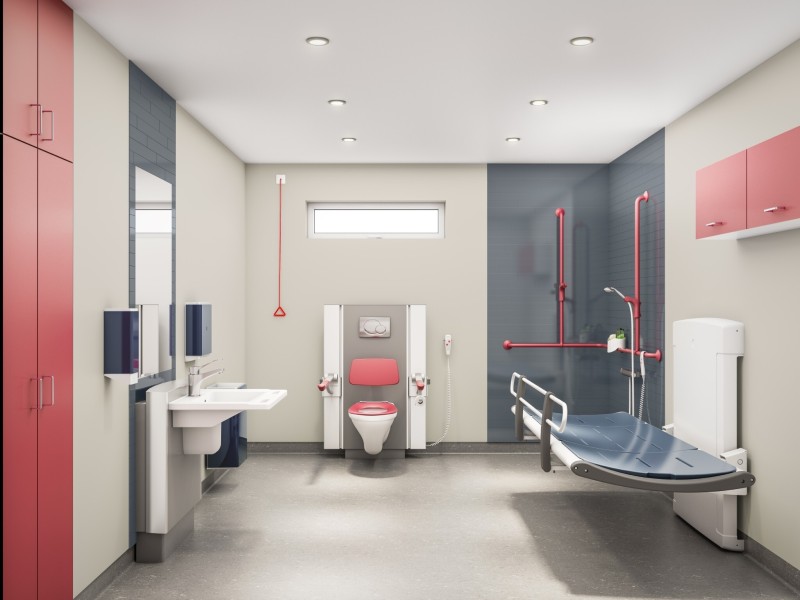
This key also accesses Changing Places disabled toilets (wheelchair accessible, and around half of them have a shower). These toilets are used by 250,000 or so people in the UK, who can’t use standard public toilets.
Why are Changing Places public toilets needed?
Carers say that conventional public toilets are very difficult to use, as they need changing benches and hoists, plus room for another person to help, and keep the safety of both persons in check. Having to change clothing and nappies on the floor is dangerous, unhygenic and undignified.
Many people look after patients with spinal injuries, muscular dystrophy and MS, which require extra space and equipment. Others look after people with profound learning disabilities.
Changing Places toilets are designed so that everyone (including homeless people with disabilities) can use them safely. They are already in many town centres, public buildings, hospitals, transport stations, sports stadiums, pubs and restaurants. But more are needed to be a fully inclusive society.
What do Changing Places toilets have?
- For a start, they are larger. Most include one or more of the following:
- A H-system track hoist to life patients (users bring their own slings)
- Adult-size changing benches (height-adjustable and wall-mounted)
- Toilets with open space on both sides, with grab rails
- Non-slip flooring and emergency alarm systems
- Large waste bin to dispose of pad and hygiene products
The Portland Loo (a public toilet for homeless people)
Homeless people have many issues, and one is where to find public bathrooms. Many places are off-limits (such as public toilets that charge money) and yet going to the toilet in parks can even bring indecency charges, if someone happens to be walking by at the time.
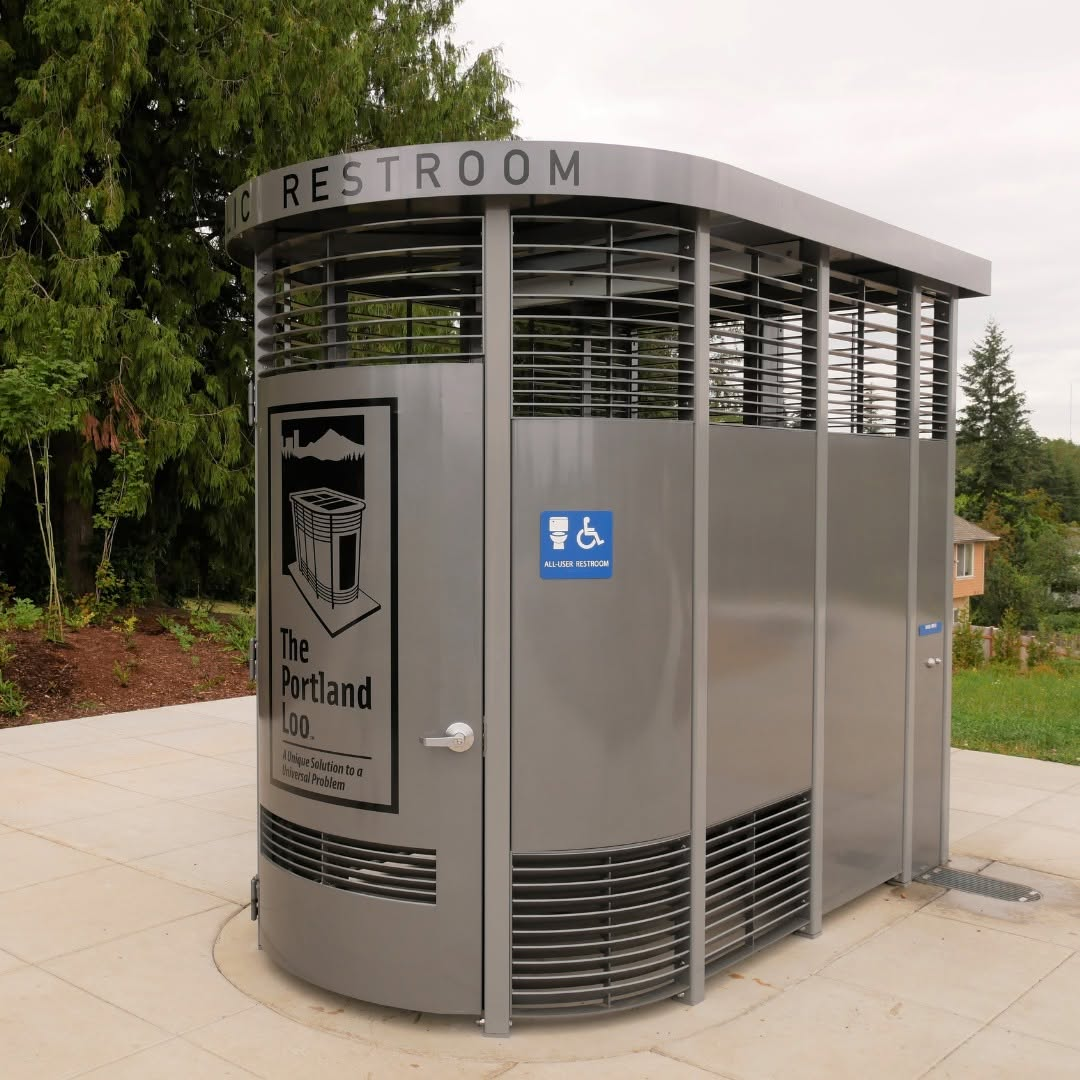
Portland Loo is a super invention from Oregon in the US (it delivers worldwide and is used as far away as New Zealand). It costs around $30,000 but is designed to last for decades. And is easily installed in busy areas or even public parks, and needs little maintenance other than cleaning.
Made from quality stainless steel, it is designed for privacy, yet has louvred walls so the top part is ventilated (also to help monitoring to avoid say being used for prostitution). With optional blue lighting, to deter drug use (makes it difficult to find veins to inject needles).
The Portland Loo is also accessible for disabled people, with exterior mounted wash stations to minimise occupancy time.
It’s also large enough inside for homeless people with dogs to take their pooches inside with them, to keep them safe while they use the facilities.
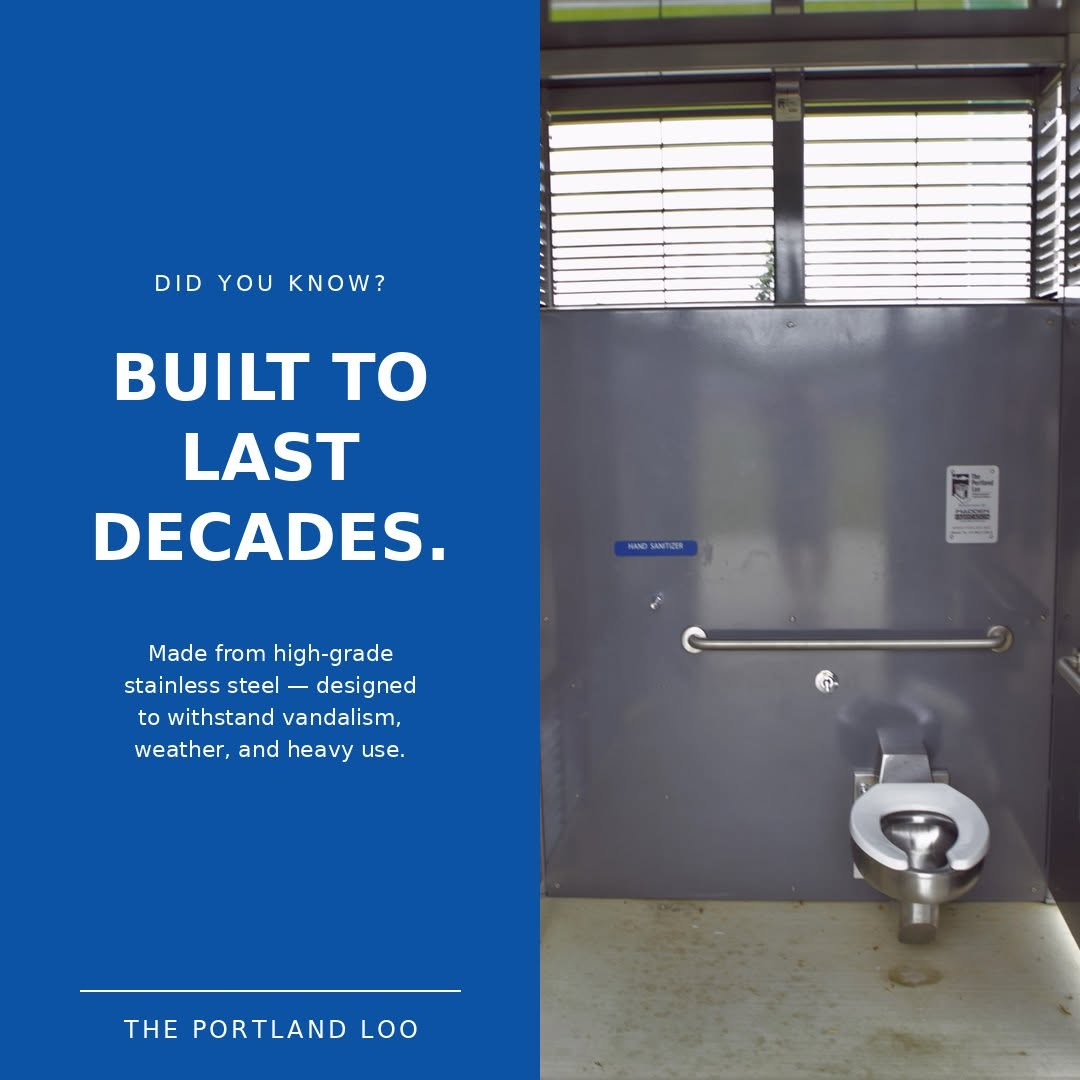
The company recommends siting in areas approved by designing out crime officers. And cleaning 2 to 5 times a day.
Other bathroom solutions for homeless people
Some free options are shopping centres, train stations, public libraries, council offices or even 24-hour supermarkets and fast food restaurants.
Pit Stop (San Francisco) are public bathrooms designed for homeless people, with places to deposit used dog poop bags and sharps boxes for needles, to avoid littering in public parks. These are cleaned by paid staff, and have soap, running water and hand towels.
They were installed, after parents were notifying the council that they were having to walk their children around human waste, on the way to school. To its credit, the council took the criticism on board and did something about it. Plus Vet SOS provides food and medical care for dogs of homeless people.
In Paris, there are over 400 free self-cleaning toilets called sanisettes. The invention is good, but policy is not as they are designed to open after 15 minutes and closed from 6am to 10pm, so homeless people can’t use them. They also don’t have hot running water, so have hygiene issues.
The Vatican in Rome gets a lot of things wrong (like taking $30,000 a month to rent a building to McDonald’s) and supporting bullfighting, too scared to lose income from Catholic countries.
But one good thing it’s done is to provide dedicated restrooms, showers and a barber service for homeless people in St Peter’s Square.