Finding dog-friendly parks (and secure runs)

Unless you have a large garden, it’s likely you want somewhere nice for your dog (or dogs) to enjoy fun and exercise. Obviously there are woods and beaches, if you live near them and dogs are allowed.
But with around half the population having dogs (and some councils banning dogs from parks or insisting they are on leads), it’s interesting to look at alternative ideas that are up-and-running.
Dog-friendly public parks
All councils ban dogs from children’s playgrounds, sports areas and fenced wildlife areas, and many require dogs to be on leads in specific areas. Others have limits on how many dogs can be walked by a single person.
The main reasons that dogs are sometimes banned from public parks are due to unsocial behaviour and guardians not picking up poop. These are easily solved with humane dog training and providing more dog bins with free bags (it’s human nature for people to sometimes forget).
The cost of installation is less than hiring staff to pick up poop, after the event. Some parks have overflowing poop bins, so the onus is on councils to employ people to empty them more often.
Many flowers (including all bulbs) are toxic to dogs. So town planners should learn about pet-friendly flowers, mulch and landscaping choices.
Keeping dogs safe in public areas
- Always follow the Countryside Code to keep all creatures safe.
- Always check for dog beach bans, before visiting. Read how to keep dogs safe by the seaside.
- Read how to keep dogs safe in snowy weather.
- Don’t let dogs run for at least two hours before and after food (and car travel) to help prevent risk of bloat.
- Keep dogs away from ponds (usually banned anyway for their safety due to blue-green algae).
- If dogs roll in poo or have salty fur, learn how to give dogs baths.
One idea in some towns is to create separate ‘senior dog parks’. This enables older dogs who are nervous, slow, shy or even blind, to enjoy a potter without concern for more boisterous dogs. This enables all dogs to have fun, without one type accidentally scaring the other!
Secured dog runs (a good business idea?)
Secured dog runs are becoming more popular, as public parks in some areas are not as dog-friendly. These are good for people with lack of access to green space, and useful for dogs that are not social or have poor recall.
Most are double-gated with high fences (creosote is illegal to use now), and usually hire out spaces by the half-hour, with covered areas to shelter in poor weather. This enables dogs to have a good run without fear of bumping into other dogs if this is of concern, and not being near sheep or traffic.
Some of note to inspire include:
- The Dog Run (just outside London) only accepts wormed dogs with up-to-date vaccinations. XL bully owners need proof of exemption certifications and public liability insurance.
- The Londog offers reviews of local enclosed parks, used by ex-racing greyhounds to dogs freaked out by noise of other dogs.
- Terrific Bark Park (Buckinghamshire) is a paddock surrounded by woodland on a private estate.
- Foxes Farm Fields (Essex) has 12 outdoor locations and 1 indoor barn.
- British Dog Fields lists spaces for UK and Ireland. It also offers consultancy services (including farmers who wish to make income from unused land, away from barnyard animals).
Public water fountains for dogs (for councils)
It’s quite unbelievable that most councils still have not invested in public water fountains for dogs, considering we are having hotter summers and heatwaves. Obviously don’t take dogs out in hot weather.
Kind shop keepers often leave out bowls of water in warm weather. But these can get dirty (or empty) before busy staff have a chance to refill them.
It’s also better to use a free-flowing fountain that drains old stagnant water to help prevent disease (and shared water), more on that below.
Abroad, many towns and cities install public water fountains for dogs (and people). These spurt out fresh filtered cool water, and are more hygienic, and let thirsty dogs quickly hydrate, if the weather suddenly turns warm.
These are great ideas for councils to do one big good thing for local pooches. The Parks Foundation (in Dorset) is fundraising to install public water fountains for all local and visiting dogs in the area.
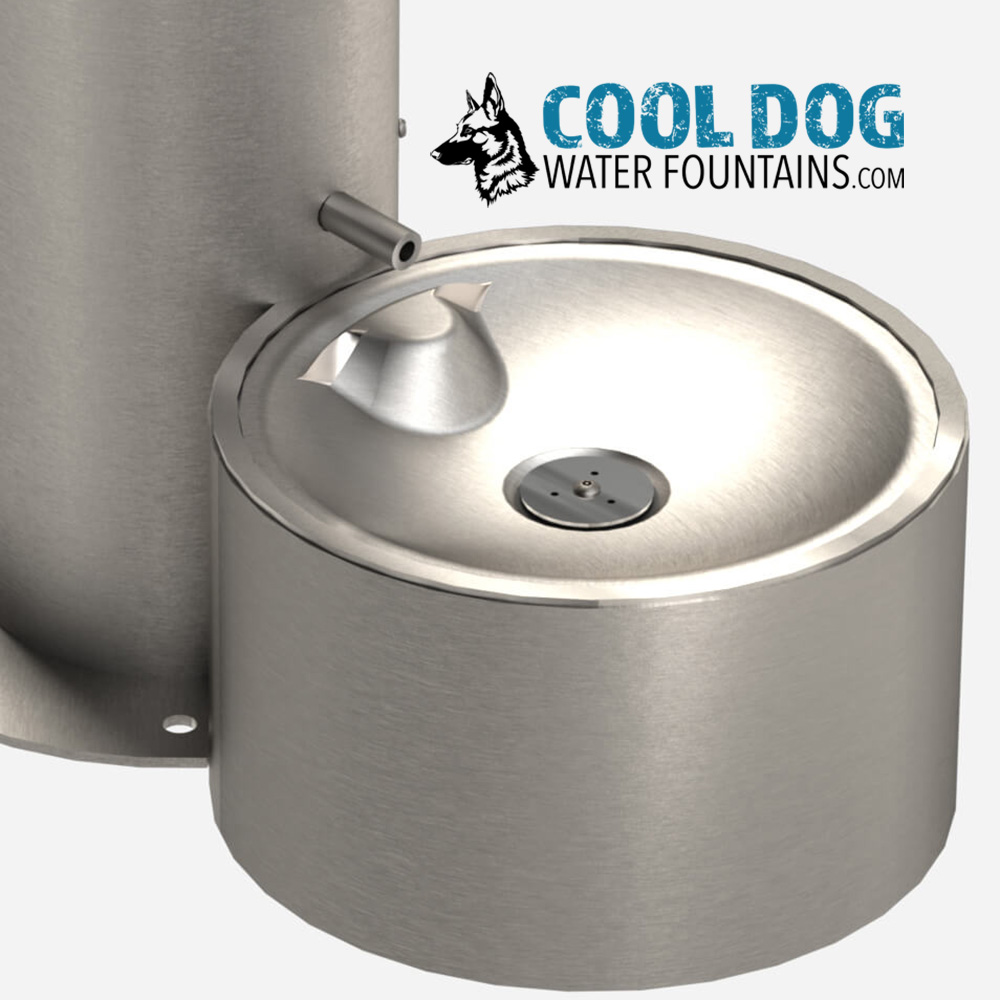
In Belgium, fountains have paw-height pivoting arms, so dogs can nudge or press the arm themselves to activate fresh filtered water into a built-in stainless steel bowl. The bowl is sloped with drainage, to prevent stagnant water.
Where to buy public dog water fountains
Although shops sell water fountains for personal households, there does not seem to be much of a market for public versions. A shame, as this one change would be hugely popular nationwide. So councils may need to order from abroad, for now from experts like The Dog Park Company.
Ensure fountains are easy to clean and safe to use, do not use toxic chemicals (never antifreeze) and are secure.
This model explains how dog water fountains work. A flowing design helps prevent stagnant water that can harbour bacteria, parasites and viruses.
In hot weather a big risk is heatstroke, as dogs primarily keep cool through through panting. As saliva evaporates, it cools blood vessels in the tongue, which then circulates to lower overall body temperature.
Fresh-on-demand flowing water reduces slimy bowls and lowers risk of communicable diseases like kennel cough and giardia. They connect to the municipal water supply, so excess water drains away.
Fountain of Woof (a Californian fountain)
In the affluent small city of Carmel-by-the-Sea, a Fountain of Woof spurts out fresh water for thirsty dogs. Often called the most dog-friendly town on earth, it also has police patrolling the beach to ensure no dogs are left in cars.
A couple of hours north of San Farncisco, there is even an annual dog calendar, with profits helping local shelters. Doris Day had a dog-friendly hotel here, and all the restaurants and shops offer fresh water and dog biscuits!
Also carry a collapsible water bowl
RSPCA sells collapsible silicone dog water bowls for a few pounds. Lightweight, it’s sold with a carabiner to secure to a belt, rucksack or stroller.
Hand wash with mild unscented detergent, rinse and air-dry.
Water needs vary between breed and size. Ruffwear says a good rule of thumb is to carry at least 8 hounds of water per dog, per hour of walking or hiking.
Wash and rinse pet bowls daily. Avoid fizzy water or guzzling water after runs or car trips (to prevent bloat). Don’t let pets drink from puddles, due to bacteria, oil and antifreeze. For outdoor pets, ensure drip-feed bottles are not blocked or frozen in winter.