Vegan Worcestershire sauce (no anchovies required)
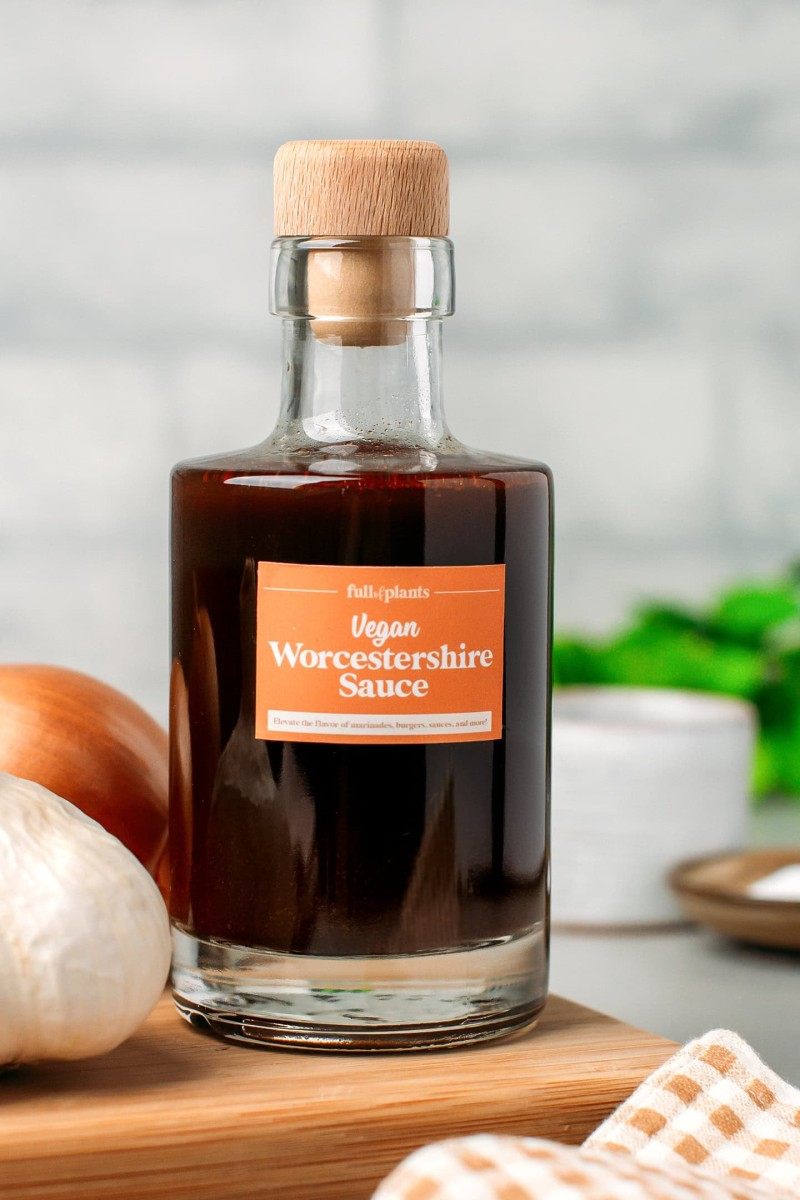
This recipe for vegan Worcestershire Sauce (Full of Plants) has the same tangy taste and only takes 10 minutes to prepare to use for salads, burgers or BBQ sauce. A blend of spice, sugar, salt and molasses, the only two unusual ingredients are apple cider vinegar and tamarind paste.
Although Worcestershire sauce (the tangy condiment used for tomato juice and vegan shepherd’s pie) was created in England, the main brands on sale are not locally based and most use anchovies), so are not vegetarian. So support plant-based versions like Bonsan or Biona.
Alternatively you can make your own in 5 minutes, but you should sterilise the jar, for safety. You can do this by running through a high-temperature cleaning cycle without other dishes in the dishwasher, and simmer rubber-sealed lids in boiling water for 2 to 3 minutes (ensure bottles are warm when filling with hot liquids to avoid cracking, and use tongs to handle hot bottles).
Anchovies are small silvery fish related to sardines, and often sold on pizza. You can get similar flavours with capers, soy sauce or miso paste (avoid if pregnant/nursing as it’s unpasteurised).
Did you know the name ‘bloody Mary’ is likely after Queen Mary, the daughter of Henry VIII. After he replaced the Pope with himself as head of the church, Mary (a devoted Catholic) later had many Protestants killed, in order to bring the country back to Catholicism.
This failed as Elizabeth I reverted back to the Protestant faith, and this gradually became what is now the Church of England.
Simple one-for-one swaps for recipes
Use it in chilli, bean stew, mushroom gravy, burger mixes, shepherd’s pie filling, and salad dressings. It also works well in tomato soup, barbecue sauce, and meat-free marinades. In each case, the sauce adds depth without making the dish taste strongly of vinegar.
Worcestershire (a very vegan-friendly county)

Maybe it’s something in the Malvern water, but Worcestershire seems to have a higher ratio of vegans than other counties. It’s also home to a vegan cooking school and many farm sanctuaries, where neglected and abused creatures live out their lives in peace, cared for by dedicated volunteers.
All struggle financially, so support them by either setting up a giving account (anonymous if preferred) at Charities Aid Foundation.
Or sign up at easyfundraising (nominate your chosen sanctuary, then anytime you buy from participating shops or services, they donate a portion of profits, at no cost to you (loyalty points are not affected):
- Baah-land has over 100 happy residents (run a shoestring budget, by dedicated volunteers))
- The Farm Animal Sanctuary does wonderful work. One pig was found on the M42 (likely fallen off a trailer, en-route to an illegal abattoir).
- Goodheart Sanctuaries is home to over 300 animals in 92 acres of rolling countryside (and two large pools, for for rescued waterfowl).
- Hillfields Animal Sanctuary offers refuge for 300 animals (who live out their days in peace and happiness).
Vegan cooking classes (near the Malvern hills)
Our Lizzy offers popular vegan cooking classes, which includes bed-and-breakfast accommodation (so you can walk off your dinner, after cooking it!) Prices include tuition, ingredients and a recipe booklet.
There are day courses for traditional or international cuisine. And courses to make plant-based bread, desserts, picnic lunches and even one on cooking with wild garlic.