Where to Find Support for Severe Depression
Depression (and anxiety) are awful illnesses. They are as serious in bad cases as any other (for instance, not only do people live their entire lives feeling miserable or on edge). But in many cases of course like suicide (the leading cause of death in men under 45), they literally die.
It’s almost ‘fashionable’ these days to talk about ‘good mental health’. But we are veering towards a society of unkind people (including media and politicians) and loud shallow lifestyles that make it almost possible for people suffering from such conditions, to find any inner peace or respite.
You ‘can’t go off to heal in nature’ when there is increasingly nowhere quiet in nature to go. And governments that put economic growth and building urban spaces and big supermarkets and out-of-town stores, means that people are often living in high-cost stressful towns and cities.
And struggling to make ends meet (you can’t ‘eat nutritious food’ if you’ve hardly any money). And live in a food desert with no good food to grow or buy.
We all know that self-help is rest, good nutrition, walks in nature and counselling. But often in the case of severe depression, those in need of help may say ‘what the point’, until they feel better. So that why it’s essential to offer support.
Common Reasons for Severe Depression
Some people have genetic tendencies, and others are depressed due to side effects of medication or even physical pain. Many take their own lives due to bullying or even the lack of a happy relationship, stable home or income.
Others can even feel depressed due to the state of the world (war, animal abuse, world starvation). The problems in society and mass suffering can be overwhelming for some to cope with.
Take for example government policies on climate change. Both Reform UK and the Conservatives want to drill for more oil (as does Trump) which the climate science says will lead to more oil spills, wildfires, floods and mass extinction of native species (as will relaxing planning laws).
But that’s all forgotten, in a bid to promote ‘economic growth’. If and when they do come into power, can you imagine the trauma of people who would watch the TV news, and see all the suffering due to policies such as this? Same abroad (polar bears could go extinct, if warnings are not heeded).
So depression is not always a selfish ‘me, me, me’ illness. It’s often a collective horror of what is going on, and how things could get worse, in a world that increasingly doesn’t seem to care.
Never judge anyone who feels suicidal. Often survivors of suicide attempts say that they were not feeling ‘selfish’ when they attempted to take their lives. More they felt the world would be better off without them.
Often it’s the result of years of many combined problems, and the coping mechanism breaks down. People often say that they did not want to die. They just felt ‘trapped’, and no longer had the mental strength to live.
That’s why suicide prevention lines (below) are so important. If someone can’t confide in a close person (or has no-one to listen), a trained listener on the other end of the phone, can often ‘stop a temporary problem becoming a permanent solution’. One that often leaves confusion and guilt forever.
Did you know that the ‘happiest countries’ (Costa Rica, Denmark, Sweden, Norway) all have very different political economic policies? Costa Rica is top of the list for the so-called ‘happiness index’ (which focuses on wellbeing and nature as much as income). And Scandinavian countries all take higher taxes, but protect people ‘from the cradle to the grave’.
Finland for instance has almost zero homelessness. When asked why they are so happy, Finns are perplexed, as they are (like Swedes) quite dour people by nature, rather than ‘happy-all-the-time’ Americans. But then many people in the USA are taking anti-depressants, so surveys often are not that accurate.
Scandinavians live their lives in the present, spend a huge amount of time in nature (Swedes in the forest, Danes at their beach huts). They don’t covet fame and fortune, and live a lifestyle akin to being in tune with the outdoor world:
And seem to be a lot better for it.
Free Helplines for Severe Depression
Obviously if you have severe depression, it’s good to visit a GP to try to get some help (alas budgets means you are more likely to be sent to cognitive behaviour therapists who will ask you to draw circles on a clipboard, and decide what ‘number’ you are on the scale of depression).
CBT may be good for phobias, but it’s usually not good for searing depression, when you want to leave this world. What does help is ‘proper therapy’ but these days it’s usually private, and that can cost a fortune (around £40 an hour, and it has to be weekly, or you won’t be accepted normally).
So if you’re in a really bad way, what can help in emergency situations is talking to someone. Of course, the best-known help is Samaritans (open 24 hours a day, and you don’t have to be suicidal to call).
All calls are free from landlines and pay-as-you-go mobiles. The number (116 123) does not appear on caller display, nor your phone bill.
There are also over 200 branches staffed by volunteers, and if not an emergency, you can email or write to them, for a reply within a week or so. All information is confidential, and the only time they will contact someone is say you told them who you were, and you were about to step in front of a train.
The charity was founded in 1953 by vicar Chad Varah, who oversaw the funeral of a 14-year old girl. She had taken her life because she had started to menstruate (and due to lack of education, thought she had contracted a sexually-transmitted disease). He later said:
Little girl, I didn’t know you. But you have changed the rest of my life for good’.
Samaritans led to a worldwide family of suicide prevention charities, including:
- SOS Silence of Suicide (a confidential free helpline on 0808 115 1505) that’s open 8pm until midnight (or 4pm until midnight at weekends). Co-founded by a woman who experienced poor mental health and suicide loss and barrister Michael Mansfield KC (who lost a daughter to suicide).
- Its free training course OPEN Conversations helps to educate and empower those who struggle, and courses for burnout and chronic pain are soon to be offered, along with nationwide mobile mental well-being hubs.
- Shout offers 24/7 free confidential text support (85258), for people who don’t like talking on the phone, or need support late at night or in busy shared spaces. You receive four automated messages, then are connected to a trained volunteer, to chat for up to an hour, until you are in a ‘safe place’.
- Suicide Prevention Helpline again offers anonymous support (0800 587 0800). Volunteers help people talk and consider their next steps.
- CALM targets the stigma around suicide (especially men) and offers a free helpline (0800 58 58 58) from 5pm to midnight, plus webchat.
I’m Okay is a suicide prevention app that sends up to 3 messages a day to check you’re okay. If within 15 minutes you don’t reply, it alerts one of your five emergency contacts. A similar worldwide app is Grassroots Suicide Prevention (download to your phone).
Specialist Helplines for Depression
Often depression is not due to ‘something wrong with your brain’, but due to specific circumstances. These helplines offer trained listeners:
- Cruse offers a free helpline for bereavement. For animal companions, Blue Cross again offers free phone support from trained volunteers.
- PAPYRUS HOPELINEUK (for people under 35) offers a helpline from 9am to midnight, and weekends/bank holidays (2pm to midnight).
- Switchboard is for LGBT people who struggle with depression.
- Gordon Moody helps people with gambling addiction.
- Farming Community Network can help with tenancy and financial issues, plus free food for livestock in cases of debt, drought or flood.
- Combat Stress offers help for veterans with post-traumatic-stress.
- Vetlife helps vet surgeons and nurses (many see animal abuse – 70% of vets have lost a colleague to suicide).
The Proud History of Chaplaincy Teams
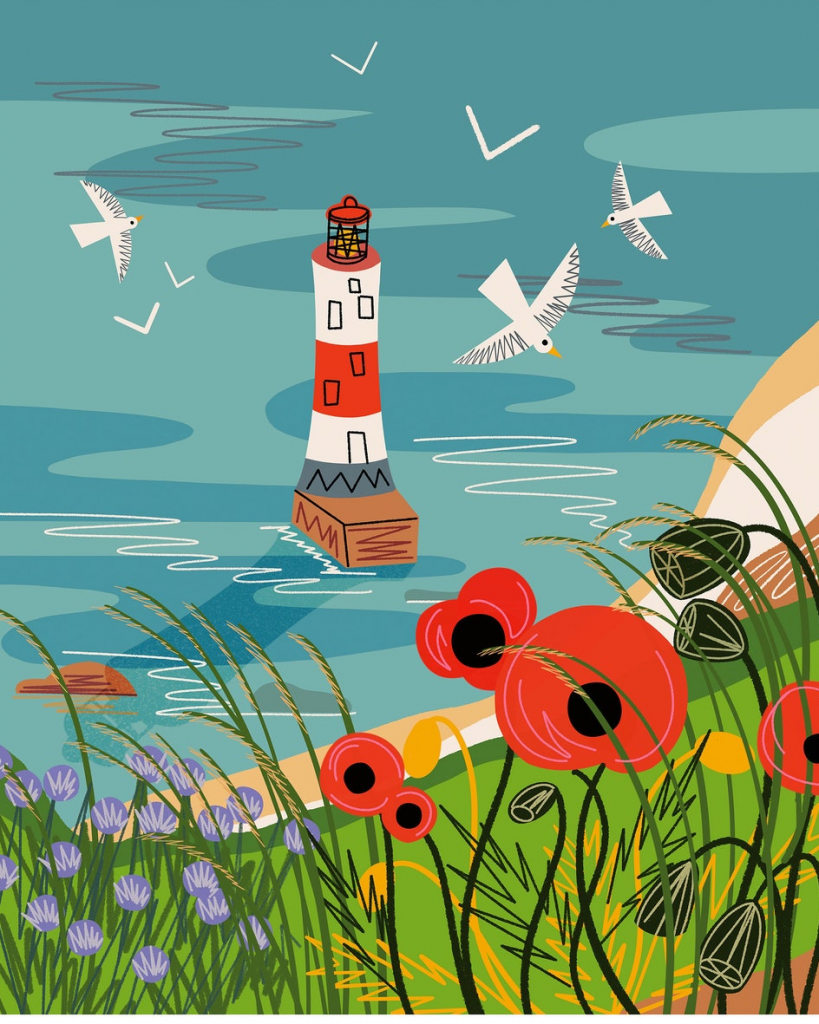
Chaplaincy teams may be more known for helping ‘drunk young ladies’ get home after a night out, but these volunteers (from local churches) also often offer first aid. And skilled listeners to people who are feeling suicidal (often installing emergency phone boxes near train stations etc).
The best-known team is at Beachy Head Lighthouse (Sussex), where skilled listeners take shifts to help anyone considering ending it all, at the nearby cliffs (one of England’s most notorious suicide spots).
If it weren’t for the chaplaincy team at Beachy Head, my wife would now be a widow. Thank you for being there are my lowest.