How to Make a Proper Bowl of Porridge
A proper bowl of porridge is about as comforting and nutritious as a breakfast can be. Invented in Scotland (crofters’ wives would make ‘porridge slabs’ to send their husbands out to work), it’s simple to make a home, cheap, delicious and nutritious.
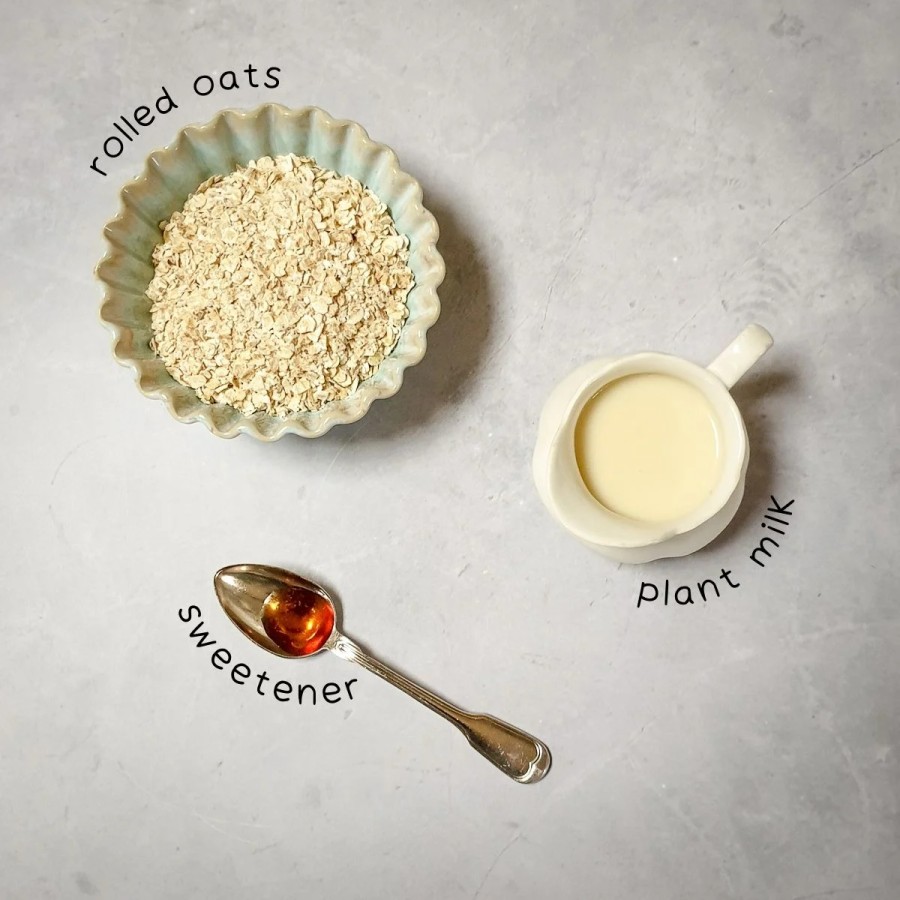
The Veg Space has a great post on how to make 4 simple porridge recipes (apple, raisin cinnamon, coffee walnut and cherry chocolate), using rolled oats, dairy-free milk and maple syrup.
Before cooking, read up on food safety for people and pets (many foods are unsafe near animal friends). Bin allium scraps (onion, leeks, garlic, shallots, chives) and citrus/tomato/rhubarb scraps, as acids could harm compost creatures. It’s okay to put them in food waste bins (made into biogas).
For tinned foods, fully remove lids (put inside) or pop ring-pulls back over holes (and pinch top opening closed) before recycling, to avoid wildlife getting trapped.
Eating porridge oats is peaceful politics in action. American food writer Michael Pollan writes that supermarkets want you to buy the high-sugar cereals, as they make more profit.
He says look at the aisles, and you’ll see they are always at eye-level, with lowly porridge on the bottom shelf. Have a look – he’s right.
Know your oats!
Oats are the foundation of your porridge, and choosing the right type can make all the difference. There are several kinds to consider:
- Rolled Oats: These are oats that have been steamed and flattened. They cook fairly quickly and result in a smooth, creamy texture. Perfect for when you have a bit more time in the mornings.
- Steel-Cut Oats: Also known as Irish oats, these are less processed and look like small pellets. They take longer to cook but offer a hearty, chewy texture.
- Instant Oats: These are pre-cooked, dried, and cut into smaller pieces. They cook in a snap, ideal for busy mornings. But lack the depth of flavour found in less processed oats.
Use oat drink for creamy porridge
Without doubt, oat drink will be the best choice for a rich creamy porridge. It’s also rich in calcium and fibre, and can be locally-grown, to support small organic farmers.
Just combine the oats with the oat milk in a saucepan, using ratios given on your pack of oats. Bring to a boil, then reduce the heat and simmer. Stir occasionally until it makes ‘proper porridge’. This will take 10 to 20 minutes, depending on your choice of oats.
A simple ratio is two cups of oat milk for 1 cup of oats. Stirring helps to release the starches, for creamy porridge.
This gives a much better porridge than those microwave sachets. Which you can’t recycle, due to the plastic lining.
Variations for proper porridge
You can then take your basic porridge recipe, and spice it up.
- Add cinnamon (keep nutmeg/mace away from pets).
- Fruits: Fresh berries, sliced banana, or baked apple chunks
- Nuts: A handful of almonds or walnuts for crunch.
- Plant Yoghurt: A dollop provides creaminess and a slight tang.
The health benefits of proper porridge
Porridge is one of nature’s healthiest breakfasts. Unlike most conventional refined cereals which are less healthy than eating chocolate cake, porridge contains oats which contain a soluble fibre called beta-glucan.
This helps to reduce cholesterol, almost ‘scrubbing your arteries’ clean, so is great for your heart, especially if you have clogged or furred arteries, or any kind of heart disease or high blood pressure.
High-fibre foods are also good to keep you full, so you will lose weight if need be. And they have a low GI, so release energy over time, so you don’t get the 11am ‘sugar crash’ when the office dessert trolley comes round!
How to make overnight oats
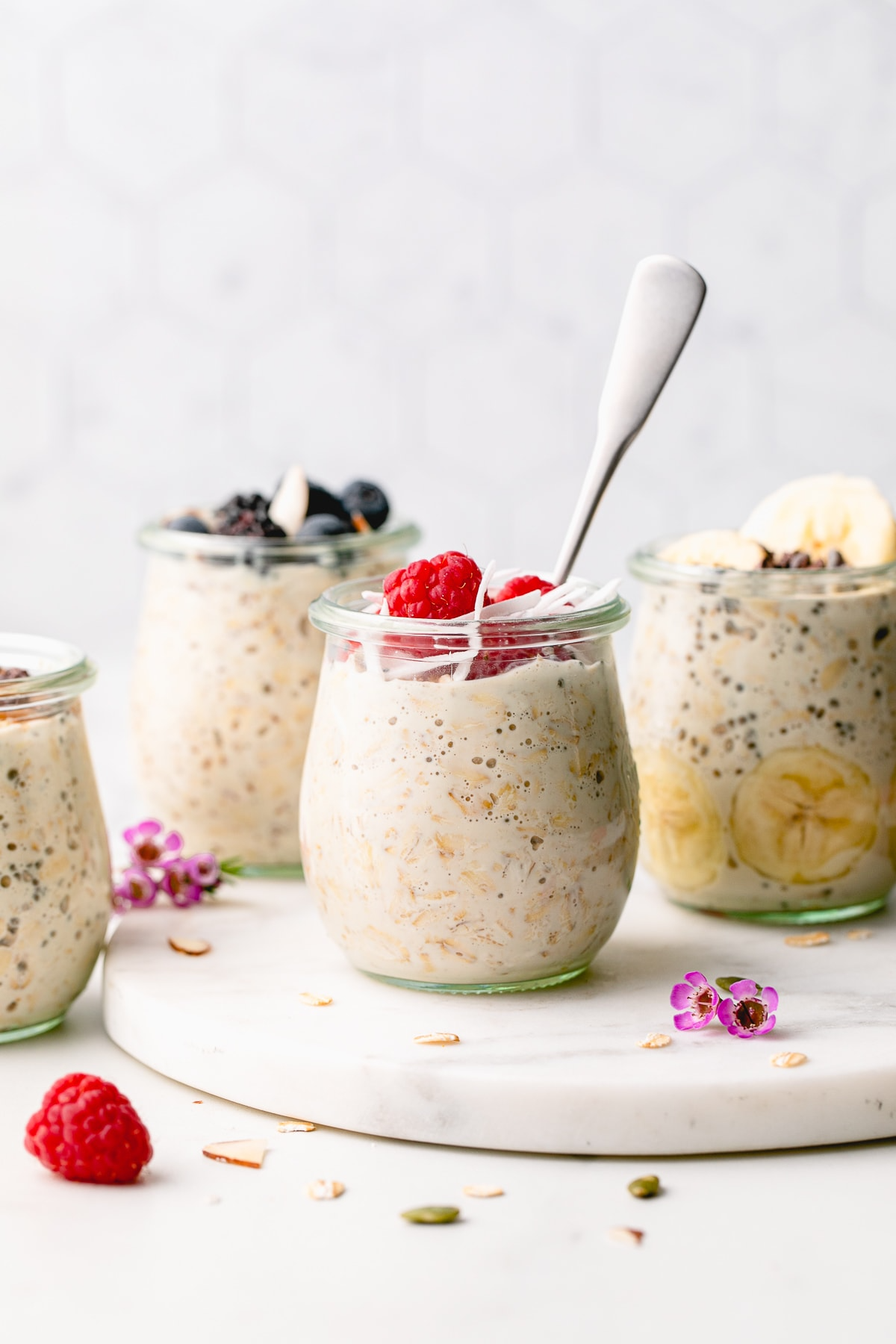
Overnight Oats (The Simple Veganista) involves prepping your oats the night before with other ingredients, then leaving them overnight in the fridge to ‘cook’ without cooking. Then just serve with plantmilk and fruits the next morning. It’s kind of like porridge, but without the cooking!
Homemade Bircher Muesli (from Switzerland)
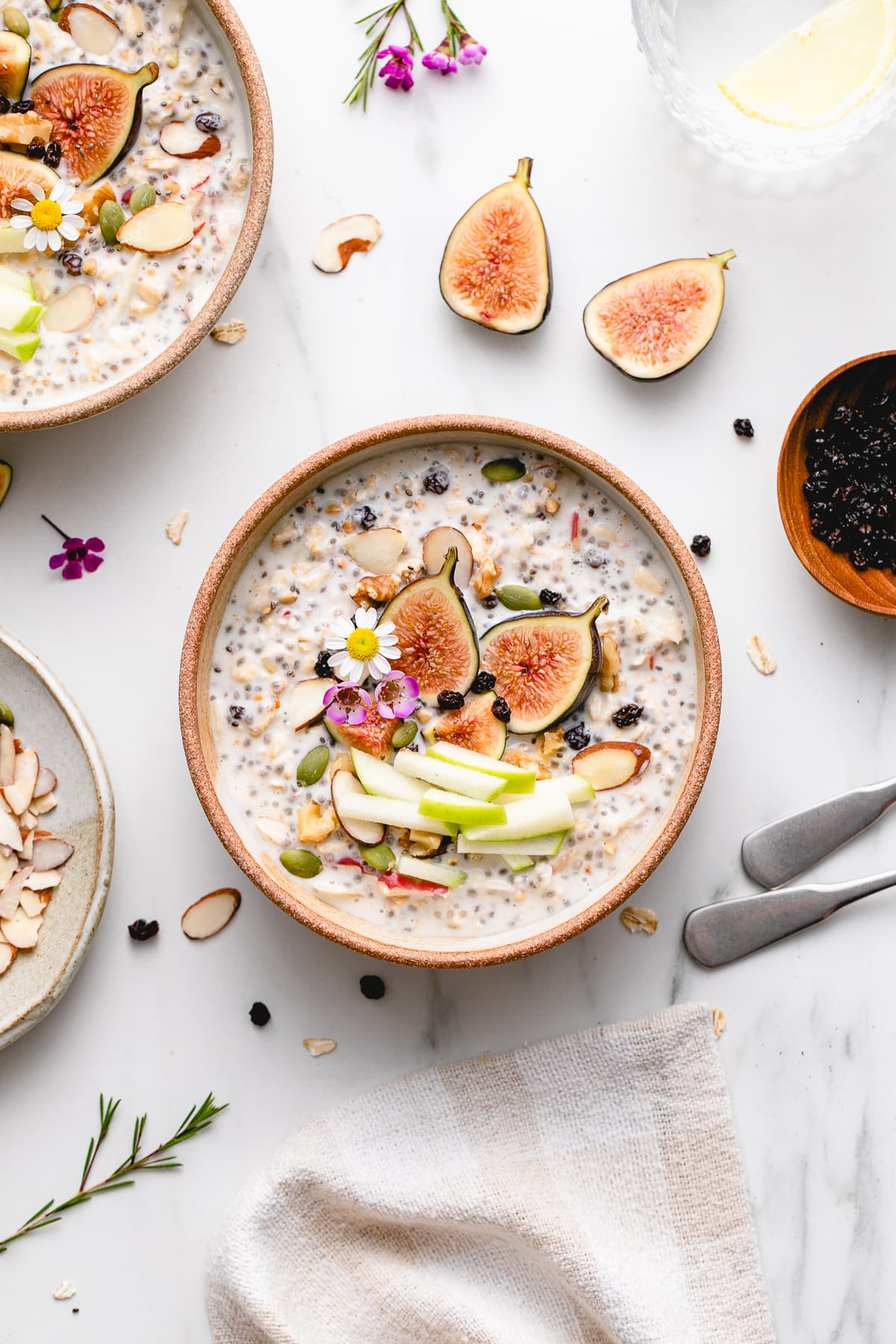
Bircher muesli is a similar recipe, that is often served in Swiss health clinics. It relies more on grated apple than other fruits, and is served with nuts and cream (omit chia seeds, for choking hazards). You can then add plant milk and optional maple syrup in the morning.
Grain Up (ready-made overnight oats)

Grain Up makes it easy to create overnight oats. Made with British oats, each bowl is packed with vitamins, minerals, fibre and protein.
You can recycle packaging at supermarket bag bins, if your kerbside does not recycle.

- Just empty the oat mix into a bowl.
- Add 90ml of plant milk to 60ml of mix.
- Stir like you mean it!
- Cool for 6 minutes in the fridge. Or overnight.
- Eat and enjoy!
If you prefer a warm breakfast, you can heat the mix in a saucepan on the stove. Or in a microwave if preferred.
For other foods, never microwave baby or pet food, it creates ‘hot spots’ that could scald throats and mouths.

You can choose your favourite flavour or ‘build a box’ to combine. The rolled oats are combined with ingredients like pea protein powder, organic coconut sugar, chopped dates, flaxseeds (for omega 3), freeze-dried fruits and natural sweeteners (stevia and erythritol).
Choose from:
- Blueberry Muffin
- Banana Bread
- Berry Chia
- Chocolate Brownie
Where have you been all my life? These overnight oats are a game-changer. They’ve elevated my breakfast experience to a whole new level.
Finally, an overnight oats brand that gets it right. It has nailed the balance of flavours and nutrition. My mornings are brighter, and my taste buds are singing!
The flavours are divine, and the textures are perfection.