Homemade Chips: Healthier, Cheaper, No Palm Oil
Chips (or fries if you live on the other side of the pond) are one of the world’s most popular fast foods, sold in chip shops and fast food restaurants, and many people make them at home, either baked or in deep-fat fryers (including restaurants).
Done well, chips can be a tasty addition to any meal. But it’s best to recycle your fat-fryer (all stores must legally take them back, even if not buying anything) and use either the oven or a new safe air-fryer to make your own.
If you do use a fat-fryer, bin small amounts of oil in kitchen towel. For larger amounts, use an oil recycling bin and take to the local oil recycling bin, to avoid clogged drains.
Avoid chips for young children and people at risk of choking. Don’t feed leftovers to pets, garden birds or wildfowl (due to salt and other unsafe ingredients).
Unless you have a food waste bin (made into biogas), just bin acidic or spicy produce scraps like peppers, onion/garlic/shallot/leeks/chives, to avoid harm to earthworms and other compost creatures.
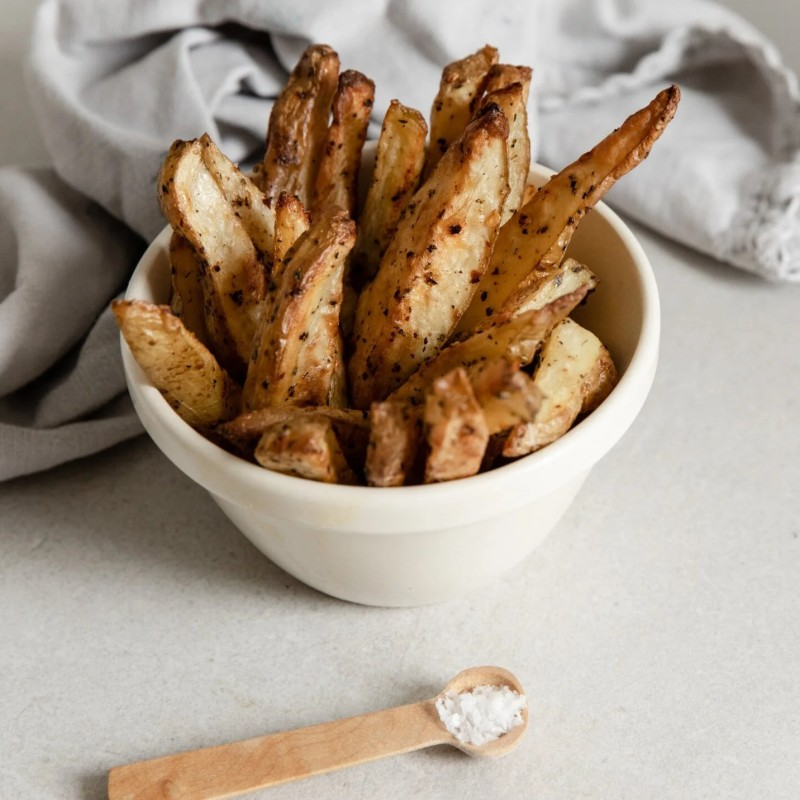
These homemade fries (Simple Vegan Blog) only need 3 ingredients: Russet potatoes, oil and salt.
There are various types of chips/fries:
- English chips are thick and chunky, often sold in British chip shops. However, most fry in palm oil, rather than local rapeseed oil, and often come wrapped in plastic (which makes chips go soggy). Some fish and chip shops are now selling shark (labelling it ‘dog fish’) due to endangered cod supplies.
- American French fries tend to be thinner. also called ‘steak fries’, these are also sold in many fast food restaurants. However, some (like KFC) fry their fries in animal fats (some McDonald’s branches do, depending on each country).
Air-fryer sweet potato fries
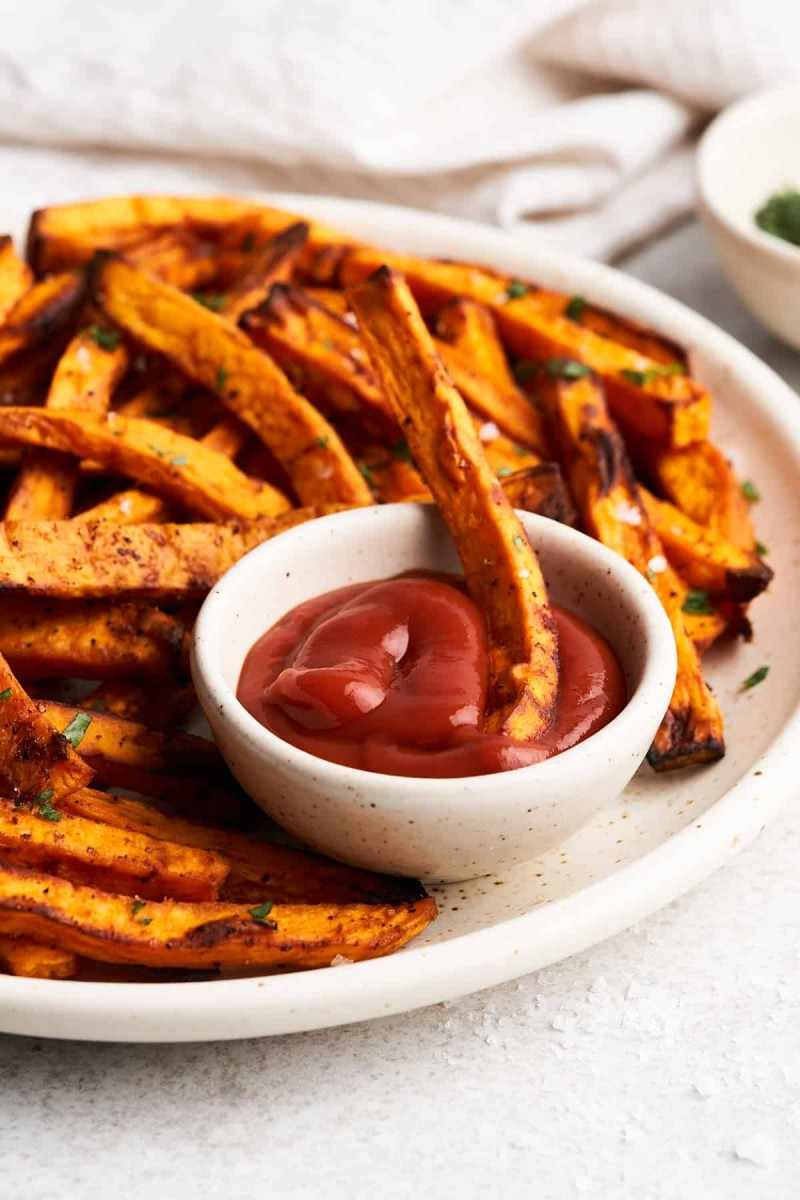
These air-fryer sweet potato fries (Broke Bank Vegan) are super-simple to make, and give added nutrition. Crispy on the outside and creamy in the middle, they are coated with smoky savoury seasonings, and good wit hdips or vegan burgers.
Strong Roots Fries (in the frozen aisle)
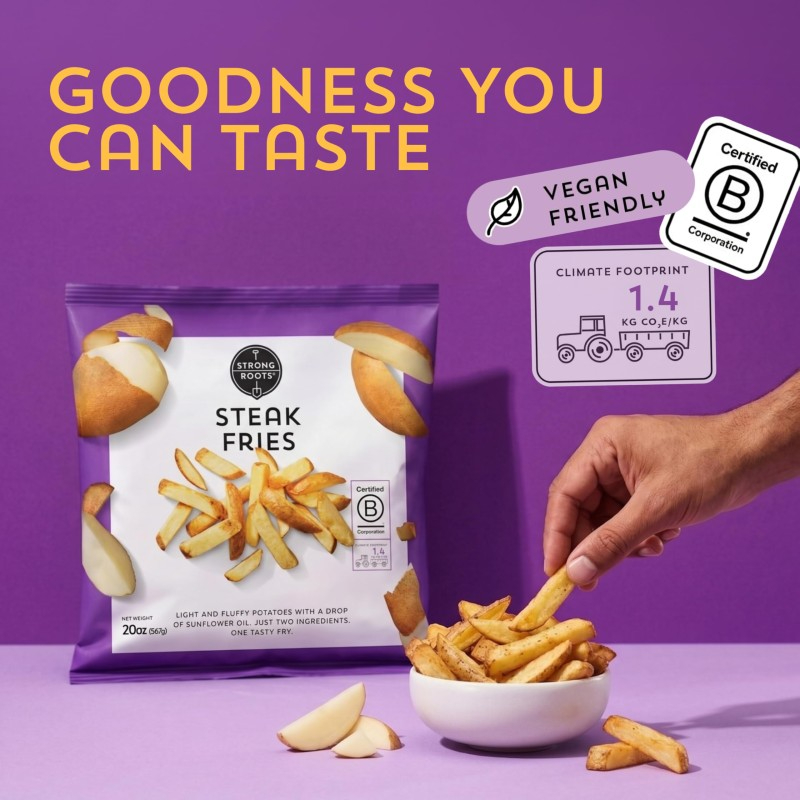
Strong Roots (Ireland) is a good brand that lists its carbon footprint in all packets. Find their wide range of chips in frozen aisles. There are standard chunky and skinny fries, plus ones made from sweet potato or mixed root veggies (it also makes hash browns). Everything is vegan, made with just potatoes and a little oil.
Recycle packaging at supermarket bag bins, if kerbside does not recycle.