Empowering Ideas to Help Global South Countries

It’s believed that around one in every 11 people go to bed hungry each night, that’s around a third of the world’s population. The world’s hungriest countries at present are Haiti, Mali, Sudan, South Sudan and the Occupied Palestinian Territories.
Yet there is more than enough food for every person on earth. In fact, more food is thrown away than is needed to feed every hungry person.
Although many Global South countries face deep challenges from poverty and hunger (often caused by war and freak weather due to climate change), just ‘throwing money at big charity’ is not the answer. The good news is that there are more effective and empowering ways to help.
From choosing Fair Trade food and drink, to giving directly to people (without big charities), you can do something to help!
Climate Smart Agriculture (could prevent starvation)

Africans don’t want to rely on westerners, they want to grow food on their own land. Climate smart agriculture does this, by supporting seeds and training for drought-tolerant crops and rainwater harvesting, to restore desert to lush land to grow healthy food at little cost.
This also provides resilience when droughts and floods hit. Recently in Tanzania, floods have killed nearly 150 people, the main city relying on ‘rain-fed agriculture’ for income. Floods have left people (and donkeys) starving, due to.
Rainforest Alliance has a good article on the benefits of climate-smart-agriculture:
- Rainwater harvesting does what it says on the tin – ensuring that on rare occasions when it rains, that water is kept to water plants and soil, rather than evaporating into the ground.
- Contour planting is used especially for tea plantations. Planting on hills or natural terraces helps to reduce soil erosion.
- Planting shade trees helps crops to flourish in hot weather. It also helps farmers grow multiple crops. You’ve likely heard of shade-grown coffee, where farmers can also grow say bananas at the same time. So get more bang for their buck, at local markets.
Stop sending all England’s trash to Africa
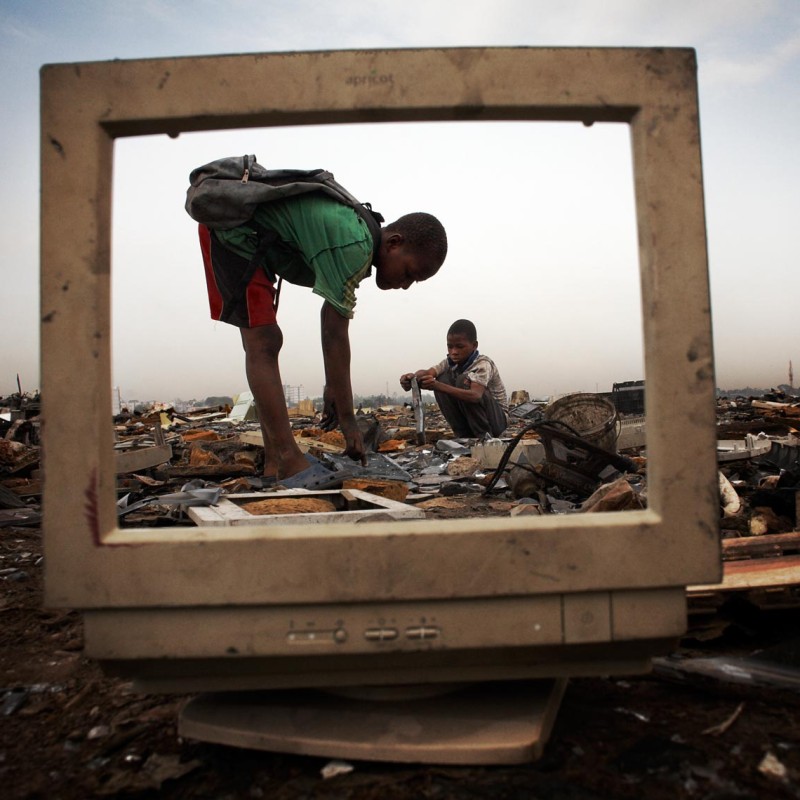
Although it sounds kind to send unwanted goods to developing countries, places like Africa don’t want them. Apart from quality working bicycles. These provide free transport to reach school and work (remove dirt, grease, mud and stickers).
But recycling household or business waste to Africa often creates more problems in a continent with few landfills or sewage systems. The electronics industry also tends to send unwanted goods here, as it saves them money on recycling.
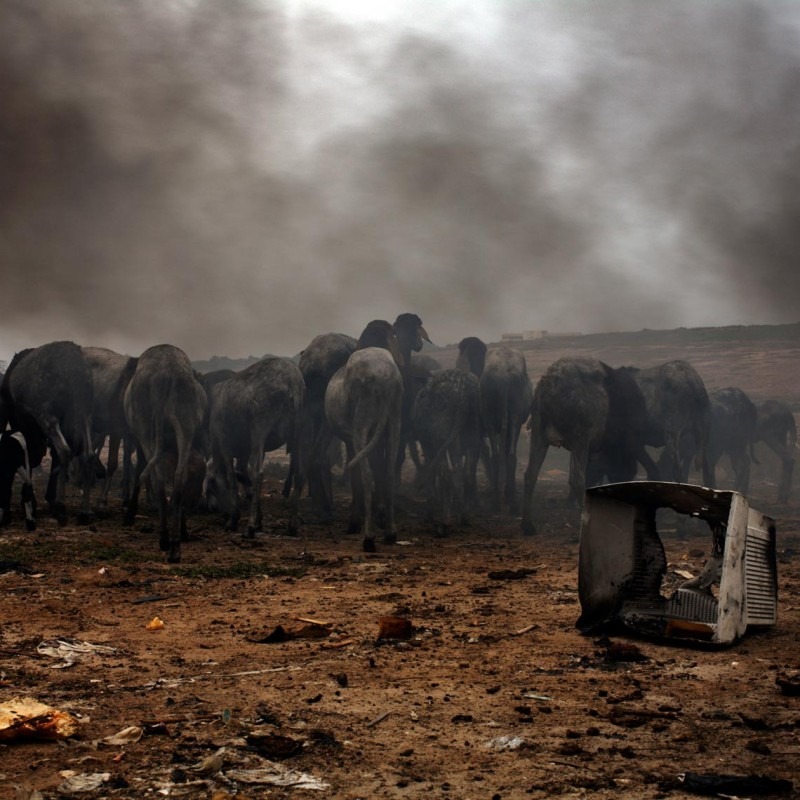
Most of the goods sent there are not in working order, so just get dumped or pieces removed to sell say as scrap metal. And this pollutes not just the land and people, but local wildlife too.
No need for ‘dead man’s white clothes’
Each week, the African country of Ghana receives 15 million items of used clothing, often sent from western richer countries. But almost half are discarded due to being poor quality (paint-stained overalls etc). And also made with synthetic fibres (polyester, nylon, recycled plastic bottles) that never break down.
So they just end up landfills and water bodies, and cause more pollution. Ghana is even now receiving umpteen unwanted ‘junk cars’ that nobody wants.
Most consumers are shocked to learn that their charitable donations are sold in Africa, rather than freely distributed. But global charities obscure the true patterns of capitalist exchange. Our ignorance is vital: it benefits the charities and fast fashion brands. The more often we empty our wardrobes, the more often we return to H & M. It’s a win-win. Artist Jeremy Hutchison
Donate unwanted clothes and shoes to small small charity shops that don’t test on animals). You can place damaged/ripped/stained cloths (including socks and undies) in textile banks. They are then shredded to upcycle into insulation, carpet underlay and other industrial goods.
The President of The Philippines recently sent back tonnes of rubbish to Canada, saying he would ‘sail to Canada and dump the garbage back there again’, if it got sent back. Canada has now agreed to cover cost of disposal.
Welcome the dark side of the digital revolution: toxic colonialism. African Centre for Economic Transformation
Wonderbag (a slow cooker that needs no power!)
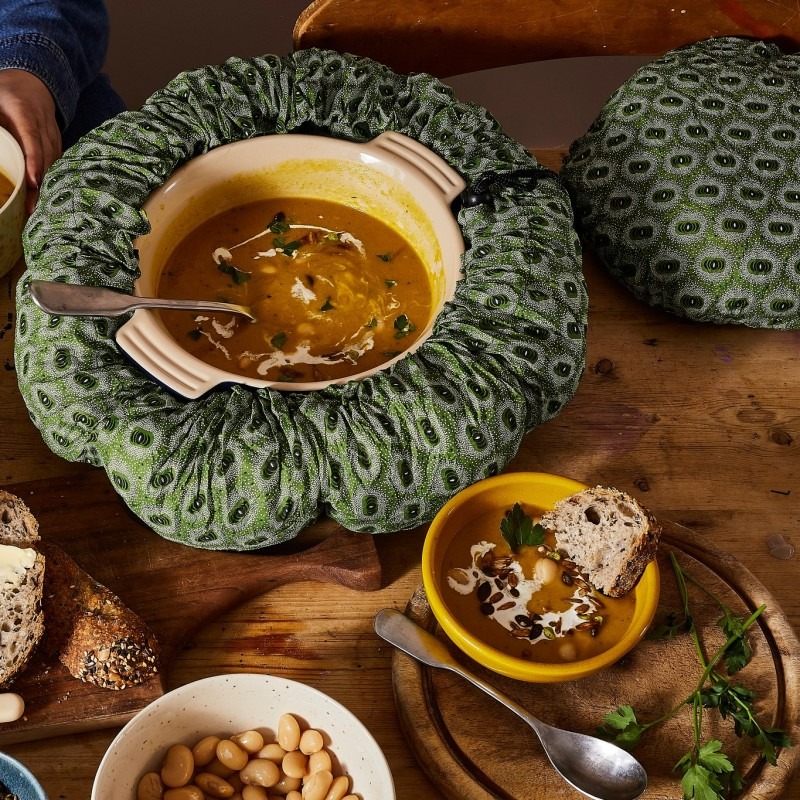
Wonderbag is a genius invention (in fact, the founder has been named one of the 50 genius creators on earth!) An idea inspired by her grandmother (who would cook food then wrap it in hay to keep it warm), it can be used in England for people concerned over energy bills.
But of course it’s also being used abroad, from Africa (to stop the use of dangerous kerosene and chopping down firewood) to more recently in Ukraine, where people can cook hot food, if they can’t afford bills or have no power.
Before cooking, read up on food safety for people and pets. Bin allium scraps (onion, leeks, garlic, shallots, chives) and citrus/tomato/rhubarb scraps, as acids could harm compost creatures. It’s okay to put them in food waste bins (made into biogas).
For tinned foods, remove and pop lids inside, or pop ring-pulls back over holes (pinch top closed) before recycling, to avoid wildlife getting trapped.
As a social enterprise, this company also uses profits to help provide low-cost cooking facilities to people in need around the world.
How Wonderbag works
First you boil your food. Once simmering, put pan in the Wonderbag. Close with the drawstring, and it will cook away for up to eight hours.
Sold in three sizes (for single households to large families), it’s made from polyester fabric on the outside, and inside repurposed foam insulation, which would otherwise have gone to landfill.
Before placing your post into the Wonderbag, lay a tea towel (or wooden chopping board) to help prevent the interior fabric from burning.
You can spot clean and hang to dry, or use a in a front-loading washing machine (due to synthetic fabrics, use a microfiber filter).
Afripads (eco feminine care made by local men!)
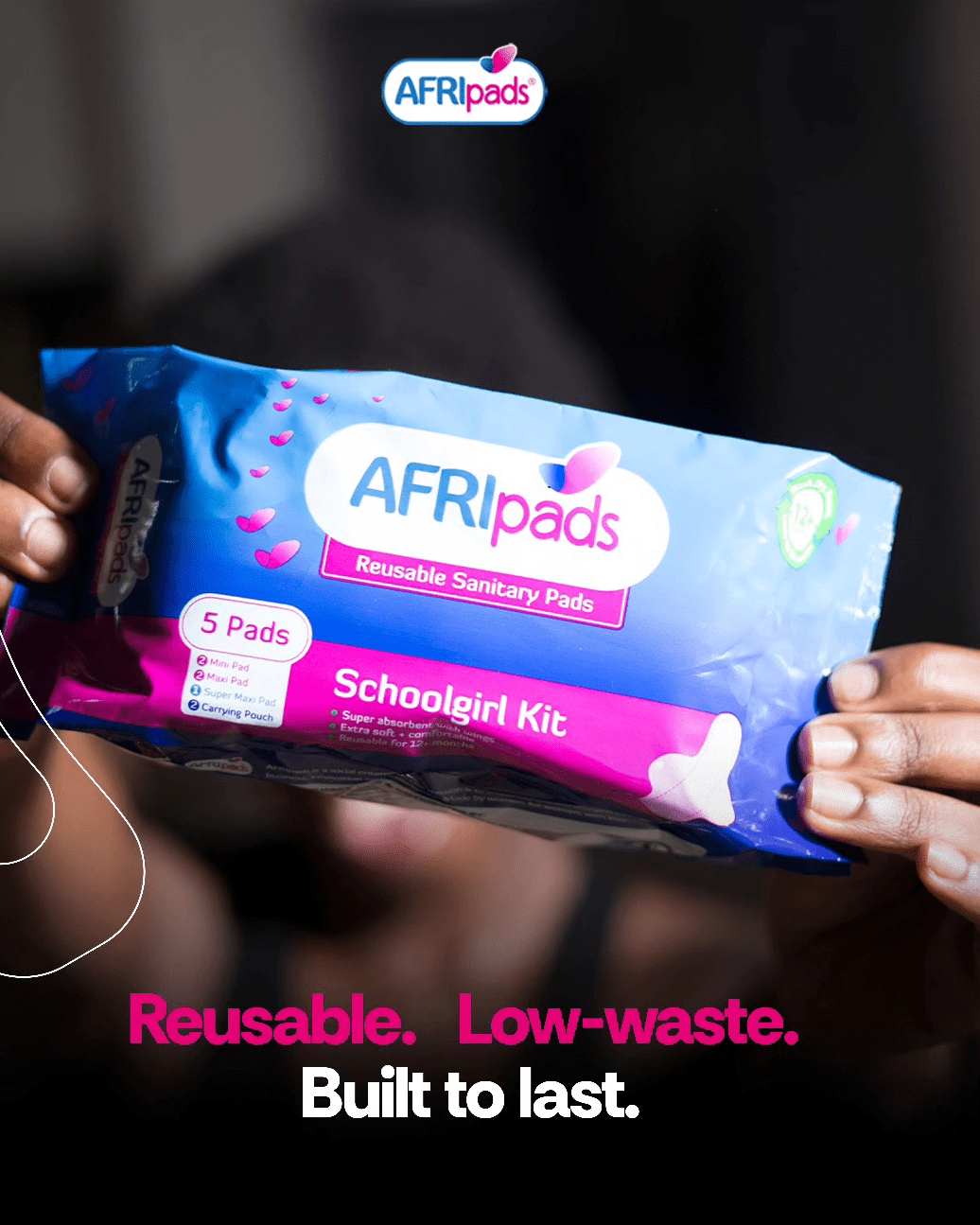
There’s something just so patronising about big western companies (often run by white men) telling us to all buy ‘free feminine care’ for girls and young women in Africa. So they don’t have to use banana leaves, or miss school or the opportunity to work, due to lack of access to feminine care products.
In fact, this is all a load of bunkum. Sending disposable plastic feminine care to African girls is not the thing to do. For a start, plastic is not comfortable in hot weather (and this is Africa!) Secondly, there are few sewers or ways to dispose of used products.
And perhaps most importantly, Africa is ravaged by poverty and has lots of cases of HIV and AIDS. So it’s likely that products could be shared, leading to the spread of more disease and heartache.
AFRIPADS (solution already found!)
Afripads are made from a blend of recycled paper and papyrus leaves. And they are made (locally) in Africa by local people (including men) who get to earn a good honest income, offering eco-friendly zero waste feminine care for the millions of menstruating women on the continent.
This was not the first company. The very first idea was created by engineer Moses, who ‘couldn’t stop inventing things’. Sent to a village to ask how he could help, two women hit him over the head with a (clean) sanitary towel, and told to him to go off and invent something better. So he did! Moses is no longer with us. But he has left an empowering legacy for African girls and women.