
England’s Harmless Basking Sharks (don’t be scared!)
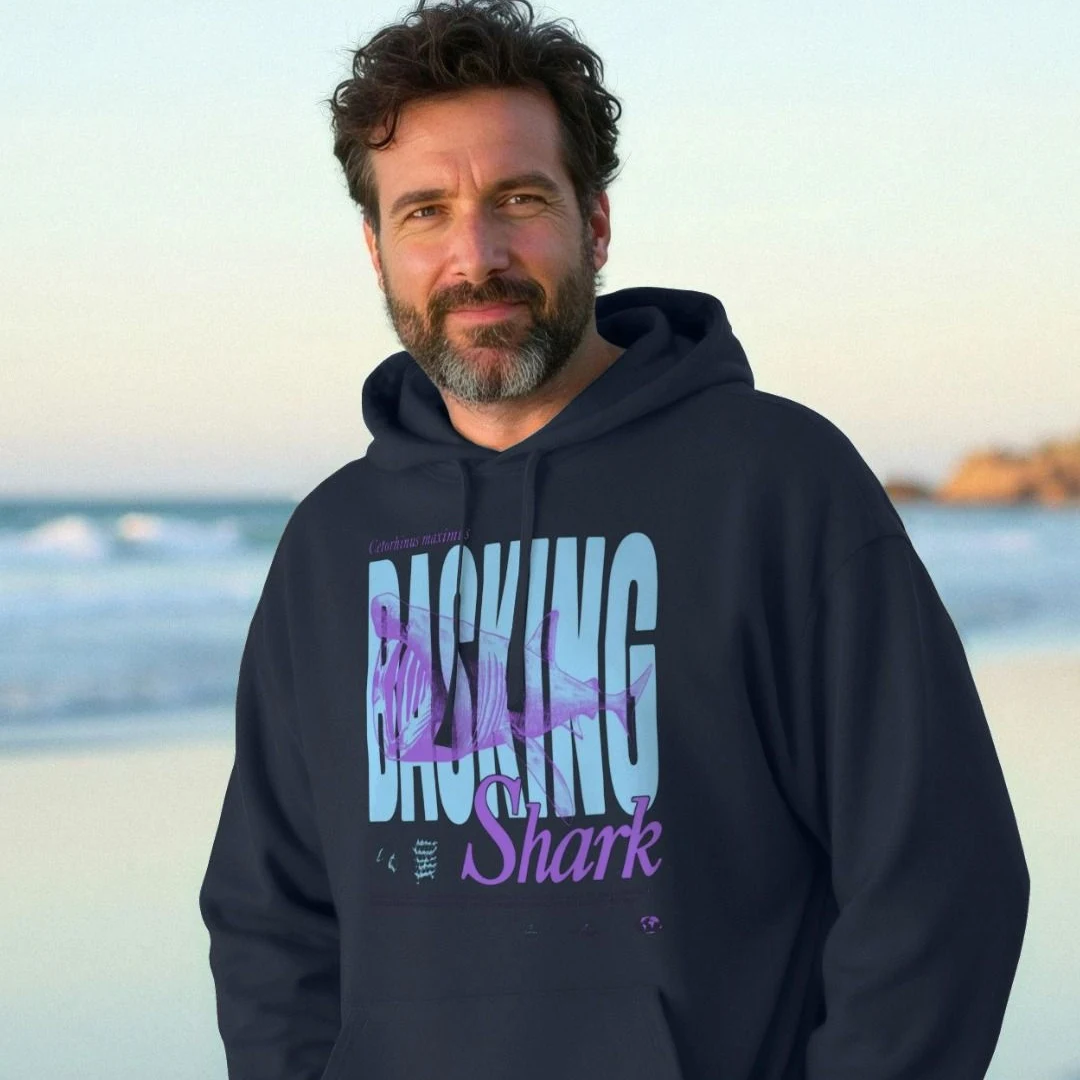
Basking sharks are native to our waters (mostly Scotland). But there’s no need to be scared. Basking sharks just eat krill and fish, and will swim right past you. The only fatality was years ago, when one accidentally upturned a small boat, with sailors inside.
The Shark Trust sells organic cotton tees and sweatshirts, made with green energy and sent in zero waste packaging. Each purchase helps fund the charity to help basking and other sharks.
The second largest fish in the world, these are truly gentle giants, who will swim right past you (their mouths are wide open but they are looking for plankton and krill, not you).
Campaigners ask people to boycott krill supplements. Still sold in Boots, they say there is not ‘sustainable krill farming’, as marine creatures need them for food.
Basking sharks can grow up to 30 feet long. They are only in our seas for some of the year, you sometimes spot them in Cornwall and Devon or western Scotland, due to plankton blooms. But they live abroad the rest of the year.
Like all marine creatures, oil and plastic pollution and over-fishing (and by-catch methods) now mean basking sharks are endangered (it’s illegal to harm them).
Help Stranded and Injured Basking Sharks
If concerned about any marine creature, call British Divers Marine Life Rescue (RSPCA and Coastguard can also put you through). Keep the area quiet, to reduce stress.
You can take Marine Mammal Medic Course, to join rescue volunteers (you must have a smartphone – and receive a lifejacket and insurance for the first year).
If you sail a boat and spot a shark (or any marine wildlife), keep at least 100 feet away (or further away if possible for large creatures). If the creature approaches your boat, switch the engine off and slow your speed to 4 knots.
Never use jet skis or flash photography. If you dive or snorkel, enter the water gently, to avoid splashing, and again keep your distance – it’s their territory, not yours.
Other Sharks Found on England’s Coast
- Shortfin mako sharks can swim up to 50 miles per hour. They eat swordfish and tuna and (like dolphins) dive out of the water.
- Blue sharks only visit England in summer, and sometimes travel up to 5000 miles to reach us! Swimming in large groups, tiger and great white sharks often eat them on the journey.
- Common thresher sharks have a tail that’s often longer than them, which they whip around to stun or disorientate fish on sea-beds.
- Greenland sharks are smaller than great white sharks, and swim so deep, you are unlikely to see them. They live from 250 to 400 years, and can take up to 18 years to gestate a baby!
Other Super Sharks (that never visit England!)

Only found in warmer waters (not England), whale sharks are the largest fish in the world (the size of a bus, with unique starry patterns).
They are named, due to swimming slowly near the water surface, as if they are basking in the sun!

The nine species of hammerhead shark have binocular vision, and can use their heads to ram their prey. They can swim sideways, and females can fertilise their own eggs, without a male shark!