How to Use White Vinegar for Cleaning and Laundry

white vinegar

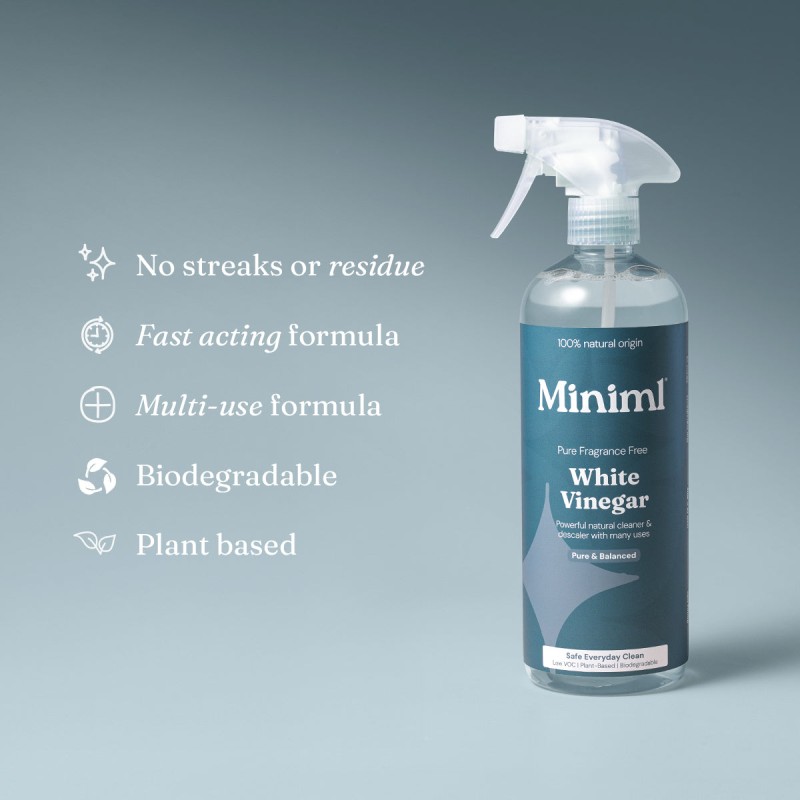
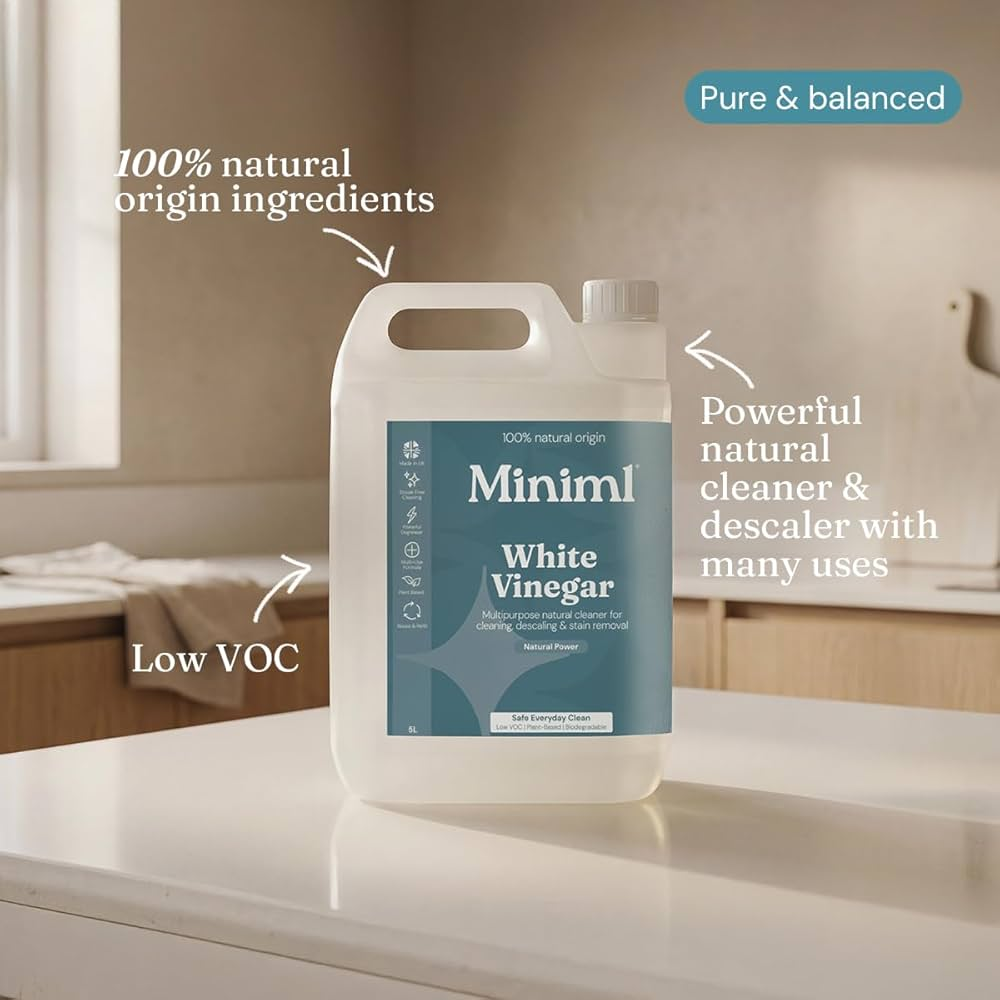
Miniml Eco Friendly Cleaning Vinegars are the ideal swaps, to keep your dishes sparkling clean (also for restaurants and hotels). Made with biodegradable ingredients (even the scents are natural), these are vegan-friendly and not tested on animals, and sold in bottles that you can send back to be refilled!

With around 6% acetic acid, cleaning vinegar is stronger than cooking vinegar. Don’t use it kill weeds, it will also kill beneficial insects. And always wear gloves and ventilate rooms. Never mix any kind of vinegar with bleach (this creates toxic gas).

Cleaning vinegar is acidic, so some materials simply don’t get on with it. Avoid using it on natural stone (marble, granite, limestone, travertine), because it can etch and leave dull patches. Skip untreated wood and waxed floors as well, since acid can strip finishes.

Choose Unscented version for pregnancy/nursing and near babies/pets. Citrus oils in particular are toxic to pets (even if rinsed and dried, residue could be licked from paws). For these homes, just clean with unscented cleaning vinegar and baking soda. 

These cleaners are concentrated, so a little goes a long way. At end of use, you can get the bottles refilled at stores that sell them, or use the QR code to send off empty bottles for refilling, and return.

The starter bottles are 500ml, and the refill bottles will last you ages!

How to use cleaning vinegar safely

  • Treat cleaning vinegar like a proper cleaning chemical, because it is one. It’s not a food product, so don’t use it in cooking, and don’t store it near condiments.
  • Ventilation comes first. Open a window, especially in small bathrooms. The smell fades, but strong vapour can irritate your nose and eyes. If you’ve got sensitive skin, wear gloves, because repeated contact can dry hands quickly.
  • Next, patch test anything you care about, such as painted surfaces, sealed wood, and glossy tiles. Pick a hidden spot, apply diluted solution, wait five minutes, then wipe and check.
  • Store it safely too. Keep the bottle upright, tightly capped, and out of reach of children and pets. If you decant into a spray bottle, label it clearly. “Mystery cleaner” causes most household mishaps.

A simple dilution rule keeps things easy:

  • For most spray cleaning, use 1:1 vinegar to water.
  • For heavy limescale, go stronger, but keep contact time short.
  • For rinses (laundry or deodorising), use a much lighter mix.

Best tools and basic recipes

You don’t need a cupboard of products. A plastic-free cloth, a soft brush, and a spray bottle cover most jobs.

Here are three mixes you’ll keep reaching for:

  • All-purpose spray (daily wipe-downs): Mix 250 ml cleaning vinegar with 250 ml water in a spray bottle. Spray, wait 1 to 2 minutes, then wipe with a cloth cloth. Rinse with clean water if the surface is food-prep, glossy, or sticky afterwards.
  • Limescale soak (taps, shower heads, stubborn crust): Mix 300 ml cleaning vinegar with 100 ml warm water in a bowl. Apply for 5 to 10 minutes, then scrub gently and rinse well. Contact time matters here, because it softens mineral build-up without giving acid time to dull finishes.
  • Deodorising rinse (bins, cloths, musty corners): Mix 50 ml cleaning vinegar with 450 ml water. Wipe, then air dry. The smell disappears as it dries.

Where cleaning vinegar works best 

  • Cleaning vinegar shines when the problem is mineral build-up or trapped odours. Think of it like a kettle descaler and a smell reset button, rather than an all-in-one disinfectant.
  • In bathrooms, it loosens limescale around taps and helps shift soap scum on shower screens. In kitchens, it brightens stainless steel sinks and tackles stale bin smells. It also works well on glass and tiles, as long as you rinse and avoid stone.
  • For most jobs, the method stays the same: spray, wait a short time, wipe, then rinse. That waiting time is where the magic happens. Five minutes often saves ten minutes of scrubbing.
  • Still, keep expectations realistic. Vinegar doesn’t disinfect like a hospital-grade product, so use a proper disinfectant when you need one (for example, after raw chicken spills). For everyday cleaning, though, it’s excellent.

Limescale, taps, shower screens, and loos

  • For taps and handles, spray a 1:1 mix, wait 5 minutes, then wipe and rinse. If your water is hard, repeat once rather than scrubbing hard. That reduces the risk of scratching chrome.
  • Shower heads respond well to a soak. Fill a small bag with a warm diluted vinegar mix, tie it around the head, and leave it 10 minutes. Then run the shower and rinse the outside. Avoid long soaks, because some finishes dull over time.
  • On shower screens, spray lightly, wait 5 to 10 minutes, wipe with microfibre, then rinse. For tile grout, use a light spray and a soft brush, then rinse quickly. Don’t flood old grout that’s already cracking.
  • For loo odours, a quick swish of diluted vinegar under the rim can help, but don’t combine it with bleach-based toilet cleaners. If you already use a bleach gel, rinse and wait before switching products.

Kitchens, sinks, kettles, and cutting through smells

  • To shine a stainless steel sink, spray diluted vinegar, wait 2 to 3 minutes, then wipe with the grain and rinse. Finish by drying with a clean cloth, because water spots undo your hard work.
  • For drain odours, wipe the plughole area first, then pour a small amount of diluted vinegar around the edges and flush with hot water after a few minutes. Don’t expect miracles if there’s a blockage, because vinegar won’t dissolve fat build-up like a proper drain treatment.
  • Kettle limescale is common in many UK areas. If the maker allows, fill halfway with a mix of 250 ml cleaning vinegar and 250 ml water. Bring it close to a boil (or boil once), switch off, then leave 15 minutes. Empty it, rinse well, then boil 2 to 3 full kettles of fresh water to clear any taste.
  • For fridge and bin smells, wipe surfaces with a light vinegar rinse, then let them air dry.

Laundry and washing machines

In laundry, cleaning vinegar is best as a helper, not the star. It can soften fibres, cut lingering smells, and help rinse out excess detergent. It may also reduce light mineral build-up in hard-water areas. However, it won’t replace detergent, and it won’t remove every stain.

Use it in small amounts. More isn’t better, because acid can stress elastic and rubber over time. Also skip it on delicate fabrics like silk and wool, and be careful with items heavy in elastane, such as stretch sportswear. Some waterproof and water-repellent coatings can suffer too, so check care labels.

If you want a simple routine, keep vinegar to occasional loads, such as towels, bedding, and sweaty kit. That gives you the benefits without constant exposure for seals and trims.

Fabric softener swap and removing odours

  • To use cleaning vinegar as a fabric softener alternative, pour it into the fabric softener compartment. A typical dose is 30 to 60 ml. Start at 30 ml, then increase only if you need it.
  • The vinegar scent won’t hang around once fabrics dry. Instead, you’ll notice towels feel less stiff, because detergent residue rinses out better. Gym kit can smell fresher too, especially if you dry it quickly after washing. Pet blankets also benefit, since odours cling to hair and detergent build-up.
  • Don’t overdo it on items with rubbery trims or lots of elastic. Occasional use is fine, but constant vinegar rinses can shorten stretch over time.

Cleaning the washing machine and musty odours

  • A washing machine can smell musty even when clothes look clean. Moisture, detergent sludge, and trapped lint cause that “damp cupboard” whiff.
  • Once a month, wipe the door seal (especially on a front loader) with a damp cloth. Next, remove and rinse the detergent drawer, then scrub the corners where gel builds up. Finally, run an empty hot wash at 60 to 90°C (if your machine allows it) with 250 ml cleaning vinegar in the drawer. Let the cycle finish, then wipe the seal again.
  • Don’t combine this routine with bleach-based cleaners in the same wash. If you want to use bleach occasionally, run it on a separate cycle with a good rinse between.
  • A small habit helps too. Leave the door and drawer slightly ajar after washing, so the machine dries out.

Similar Posts