Bicarbonate of soda (natural cleaner and odour remover)
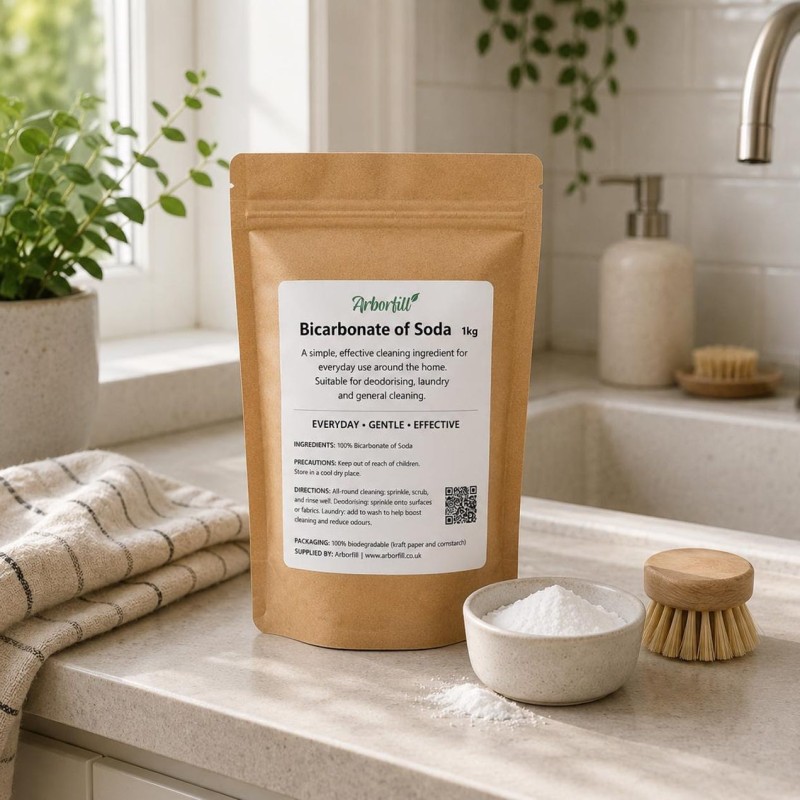
This pack of bicarbonate of soda is sold in a resealable plastic-free pack (500g or 1kg). It’s useful for many cleaning and laundry tasks, and works out far cheaper than using those little pots you buy from supermarkets.
Sodium bicarbonate is a natural mineral compound that is both mildly acidic and alkaline. So it can break down grease, lift dirt and neutralise odours (it was even used to clean the New York’s Statue or Liberty!)
Only buy what you need for a few months, as it loses its strength the longer it’s left. Do not use on aluminium or delicate fabrics.
Avoid adding essential oils if pregnant/nursing or near babies/pets (citrus oils are particularly unsafe near pets, even on rinsed/dried surfaces). Use with plastic-free cleaning cloths and rubber gloves.
The many uses of bicarbonate of soda
With one bag, you can use it to clean many surfaces:
All-purpose cleaner: Mix 1 tablespoon to 250ml water for sinks, workshops, tiles, ovens and cooker hoods. For stubborn grime, sprinkle a little powder on a damp sponge and gently scrub. Rinse and allow to dry.
Burnt pots and pans: Sprinkle into pan, add a little warm water and leave for 10 minutes. Then scrub gently with a cloth or sponge. This remedy also works for glass, enamel and stainless steel cookware.
Cleaning fridge/freezers: Mix with a little water to make a paste. Then wipe over shelves, drawers and door sesals. Rinse with a clean damp sponge and dry thoroughly, before replacing food.
Tea/coffee stains: Mix a little bicarbonate of soda with water, then run gently around stain. Then rinse clean.
Cleaning microwaves: Fill a microwave-safe bowl with water and add 2 tablespoons of bicarbonate of soda. Heat on high for 5 minutes. The steam will loosen dried food, so it’s easy to wipe off. Never heat baby food or pet food in microwaves.
Remove sticky labels: Make a paste with water and a little oil. Rub gently on sticky residue. Switch to plastic-free packing tape!
Polishing silver: Mix with water to create a paste. Then use a soft cloth to gently rub silver, rinse and buff dry. This helps to remove tarnish, but aggressive rubbing could damage delicate surfaces.
Clean a dirty oven: Remove racks and trays – wash/soak separately. Mix 1/2 cup with water with 3 tablespoons water to create a paste, and coat the oven interior. Avoid touching electrical heating elements or gas openings. Leave overnight. Use a damp cloth to wipe away dried paste.
Use baking soda to remove odours
Again just one bag will do many jobs!
Freshen fridges, bathrooms, wardrobes: Place an open container of bicarbonate of soda in area. This naturally will absorb odours.
Freshen bins: Sprinkle powder inside, and replace weekly.
Clean smelly and slow drains: Pour one cup of bicarbonate of soda into drain, followed by one cup of cleaning vinegar. Leave for 5 minutes, then flush with hot water. This will also clear minor soap residue/hair blockages.
Freshen shoes: Sprinkle inside shoes and leave overnight. Shake out powder the next day.
Carpet/fabric freshener: Sprinkle on carpets, mattresses and car seats. Leave for 15 minutes, then hoover up thoroughly. Do this before allowing babies/pets back in rooms.
Freshen pet bedding: Shake or brush off loose fur first. Then sprinkle a thin layer of bicarbonate of soda on the bed and leave for at least 30 minutes. Hoover thoroughly with a brush attachment to pick up all powder (ensure pets stay away to avoid inhaling or tracking the powder).
Laundry booster: Add 2 tablespoons to washing machine, alongside laundry powder. This is great to freshen towels and sports clothing. Use a microfiber filter for synthetic fabrics.
Put out small grease fires
You can also use bicarbonate of soda to put out small grease fires, as it can release carbon dioxide, to reduce oxygen around the flames.
If a pan catches fire:
- Turn off the heat.
- Grab a generous handful of bicarbonate of soda.
- Throw it at the base of the flames
Only do this for small fires. For bigger fires, use a fire extinguisher and leave the house, and call 999. Never throw water on a grease fire.
Where to recycle toxic cleaning products
Most kerbside recycling schemes take empty bottles. For bottles with product inside, take to your hazardous waste department for proper disposal (don’t pour down sinks or drains).